Blog » Components Engine vs EzParts: Choosing Your Catalog Software
Components Engine vs EzParts: Choosing Your Catalog Software
When a technician orders an incompatible component because a paper manual lacked clarity, the machine stays offline for days while the correct item ships. Equipment downtime costs an average of $15,000 per minute globally for large enterprises, a rate that varies by company size. Despite decades of investments in predictive maintenance technologies, 79% of maintenance teams still see their unplanned downtime stay the same or increase. These outages extract heavy financial penalties, averaging $260,000 per hour across all manufacturing sectors, though the cost ranges up to $2.3 million per hour for automotive manufacturing plants. Maintenance professionals attribute these escalating repair costs directly to emergency replacement part sourcing, pointing to expedited shipping and premium aftermarket pricing as the primary factors driving up total repair bills.
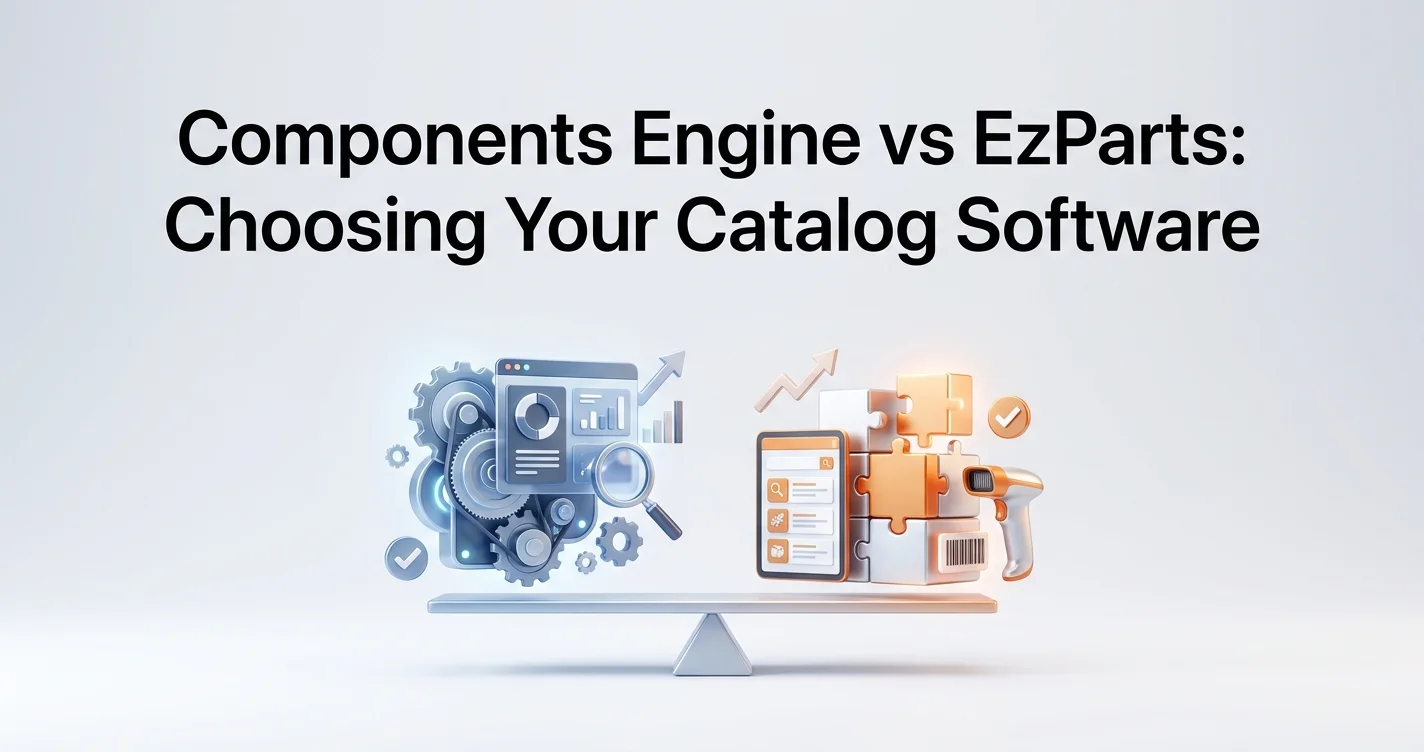
Original Equipment Manufacturers (OEMs) solve this ordering bottleneck by replacing static PDF manuals with interactive Electronic Parts Catalog (EPC) software. Comparing Components Engine vs EzParts clarifies which architecture fits your heavy equipment operation. While Components Engine focuses on 3D catalog creation and integrated warranty workflows, EzParts by Systems Online tackles lookup errors through deep enterprise resource planning (ERP) integration and robust offline tools for remote service.
Your choice dictates whether dealership networks and field technicians can find and buy the parts you manufacture in a global electronic components market valued at $722.53 billion in 2025 and projected to reach $1.51 trillion by 2035.
Mapping Catalog Architectures to Aftermarket Workflows
Map your buyer requirements to the core strengths of each platform before auditing specific software features. These two systems handle the common requirements for aftermarket parts distribution through distinctly different mechanisms.
| Feature Area | Components Engine | EzParts by Systems Online |
|---|---|---|
| Primary Workflow Focus | 3D visual cataloging, interactive web interfaces, and embedded warranty claims integration | Multi-channel catalog delivery, complex Bill of Materials (BOM) grouping, and ERP-driven eCommerce |
| Offline Deployment | Browser-based offline compatibility requiring manual localized data caching | Standalone distributed media builder (USB/DVD) and fully synced native mobile apps for iOS and Android |
| ERP Integration | Standard API connectivity for custom developer implementations | Native, direct data exchange with SAP, Oracle, Microsoft Dynamics, and Epicor |
| Warranty Management | Built-in 'Components Engine Claims' module accessible directly from the visual schematic | Requires integration with external warranty management tools or secondary dealer portal systems |
| PDF Parts Books | Manual export tools requiring user-defined layout controls and formatting adjustments | Automated template-driven publishing engine connected to live database updates |
| Hotspot Mapping | Standard boundary definitions for basic clickable zones | Multi-shape, precision vector overlay mapping for highly complex, overlapping nest diagrams |
Review your current aftermarket revenue metrics to identify whether the biggest financial leak stems from warranty claim inefficiencies or abandoned dealership orders caused by inaccurate inventory data. This specific constraint should drive your platform selection. For instance, if your data shows a high frequency of abandoned shopping carts at the dealer level, you must prioritize a platform offering live inventory visibility. Conversely, if your call center receives constant complaints regarding warranty submission delays, prioritizing native claims functionality becomes paramount.

Choosing Between 2D Vector Mapping and 3D Schematics
Text-based part lookups fail when a technician stares at a disassembled transmission, requiring modern EPC software to replace list-hunting with interactive 2D and 3D schematics. Modern platforms have evolved far beyond static digital parts listings by deploying 3D visualization, interactive diagrams, and natural language queries. Technicians pinpoint the exact physical component on their screen, verify its location within the larger assembly, and add the item directly to a shopping cart with a single click.
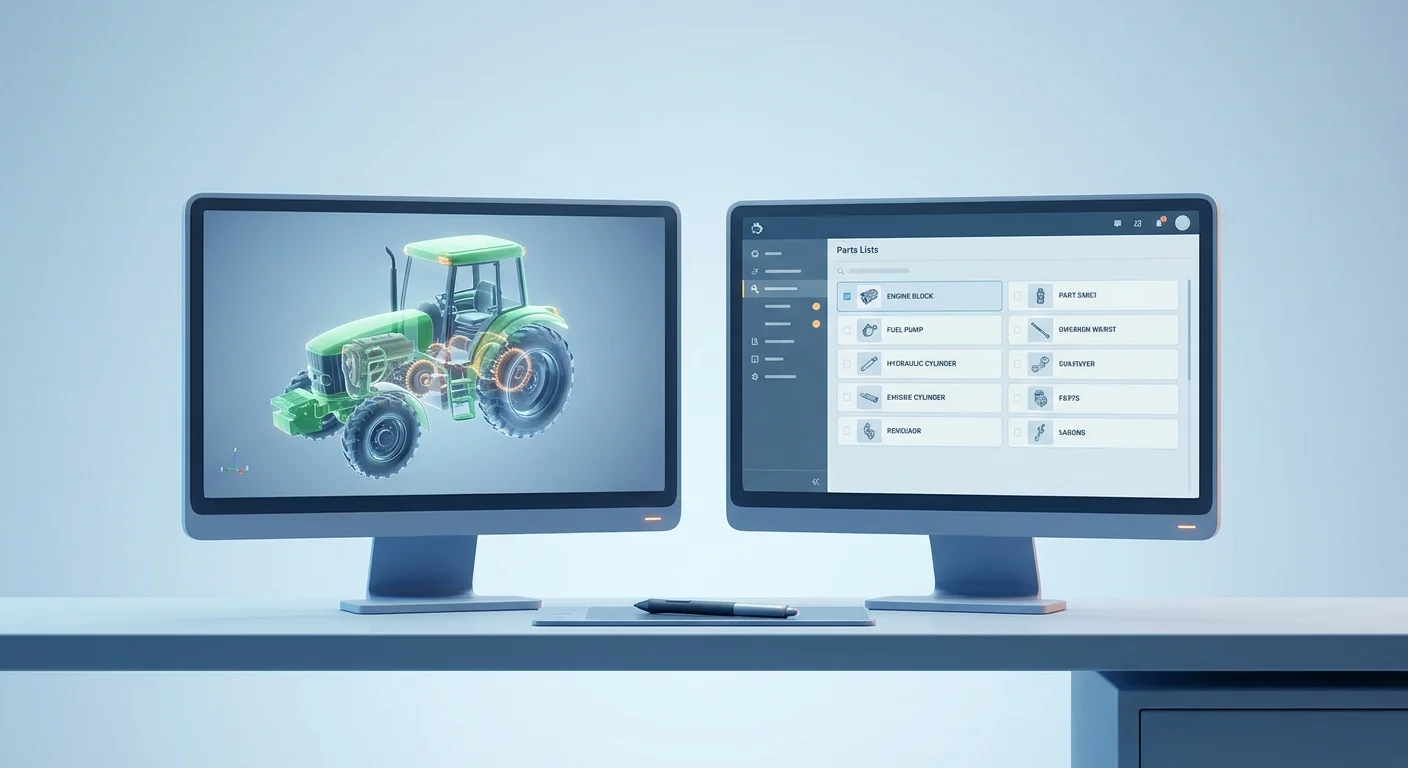
Components Engine emphasizes native 3D interactive catalog creation by letting you import 3D CAD models and convert them into navigable web interfaces. Mechanics can rotate the assembly, explode the model into individual pieces, and identify the required part visually in seconds. This approach suits OEMs who already maintain pristine, updated 3D CAD files for every piece of legacy equipment in the field. When a service worker attempts to locate a specific valve deep inside a hydraulic pump, dragging the 3D model allows them to isolate the layer and verify the exact visual profile of the component before ordering.
EzParts by Systems Online maps multi-shape hotspots across massive libraries of both 2D drawings and 3D models. While standard hotspot tools draw crude squares around irregularly shaped parts to create overlapping click zones, EzParts lets you map pixel-perfect boundaries over complex vector graphics. If a technician clicks a tightly nested gasket in an engine diagram, the software selects only that specific component. This precision prevents users from accidentally highlighting the adjacent piston or cylinder head. The gold standard for digitizing static catalogs requires mapping accurate, clickable boundaries over these visuals, eliminating manual text-based lookup errors entirely.
Audit your existing technical documentation repository to determine if your engineering team relies on flat 2D schematics or legacy vector files for older product lines. If they do, choose a platform that handles multi-shape 2D hotspots as efficiently as 3D models, because forcing an upgrade to 3D catalogs will fail if your source data cannot support it. A manufacturer with twenty years of archived 2D PDFs must ensure their chosen EPC can accurately overlay multi-point polygons onto those specific flat files without requiring an expensive CAD conversion project.
Delivering Catalogs to Disconnected Job Sites
Field technicians repair agricultural harvesters in deep valleys and service mining drills underground where internet connectivity remains nonexistent. If your parts catalog requires a cloud connection to render a schematic or verify a part number, these technicians will guess the identifier, which triggers a costly return process later. While cloud-hosted software deployment continues to rise, field service personnel in rural or developing markets still rely heavily on localized and offline functionality.
Both software options address disconnected environments using different underlying technologies. Components Engine provides offline browser compatibility by requiring mechanics to download a localized version of the catalog to their laptop. The localized file runs through standard web browsers without an active internet connection to cover basic lookup needs, provided the technician remembers to cache the data before leaving the cellular coverage zone. This solution works adequately for urban service fleets that only occasionally enter concrete basements or dead zones for short periods.
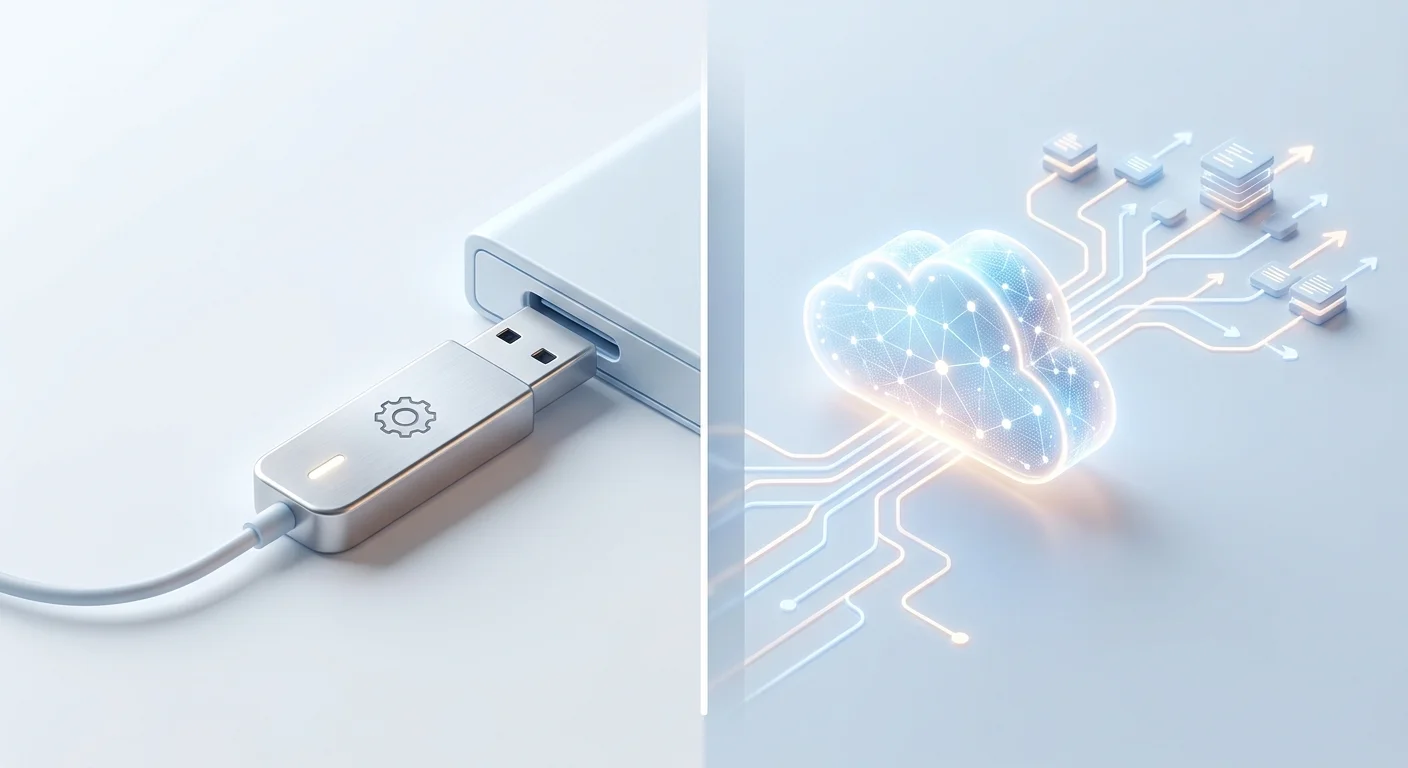
Systems Online built EzParts for extreme remote environments using a dedicated distributed media engine that packages the entire catalog database, schematics, and eCommerce logic into a standalone format. You distribute these encrypted catalogs via USB drives, SD cards, or fully synced native mobile applications for iOS and Android. Because the offline application functions identically to the web portal, technicians can build comprehensive service orders underground and save the cart locally. The software then synchronizes the transaction with your ERP the moment the device reconnects to a cellular network. This localized resilience remains critical for heavy equipment servicing, allowing an agricultural mechanic in a remote wheat field to identify the correct combine belt, add it to their offline cart, and have the order transmit automatically while driving back to town.
Test your catalog software's offline resilience before deployment by turning off the Wi-Fi on a field laptop, opening a complex 3D schematic, and attempting to build a 15-item parts order. An interface that hangs or fails to save the local cart data will ultimately fail your technicians in the field. You must verify that the offline cart logic retains specific quantities, user credentials, and session data indefinitely until the device finds a stable network connection.
Connecting Schematics to Live ERP Inventory Data
Dealership networks refuse to use portals that display outdated inventory, because a service manager clicking a hydraulic cylinder in an EPC diagram needs to know if the part sits in the regional warehouse or requires a four-week backorder. Displaying static pricing undermines dealer trust, driving them to purchase aftermarket alternatives from third-party competitors. Integrating the catalog directly to backend business systems to surface accurate warehouse quantities minimizes the risk of incorrect orders and strengthens the dealer-OEM relationship.
Connecting the schematic interface directly to backend business systems solves this data lag. While both platforms offer API endpoints for custom development, they differ in the depth of their native, out-of-the-box connectivity. Relying solely on manual batch uploads for price files results in weekend pricing discrepancies, leaving dealers guessing at final costs.
EzParts differentiates itself through pre-built integrations with major enterprise platforms like SAP, Oracle, Microsoft Dynamics, and Epicor. The moment a service manager clicks a hotspot, EzParts executes a query against the ERP to retrieve regional warehouse quantities and calculate customer-specific pricing tiers based on the dealer's login credentials. It then renders this data alongside the diagram without reloading the page, which means OEMs never have to manually update price files within the catalog software itself. When a part shows zero inventory in the primary location, the integration can automatically query secondary distribution centers to provide the service manager with accurate regional lead times.
Map your data flow requirements before purchasing an EPC by requiring your software vendor to demonstrate their authentication process. They must show how the system captures dealer logins and passes those credentials through to your specific ERP version to fetch live, tiered pricing. If a dealership maintains a volume-based discount, the software must read that specific discount rule from the ERP and adjust the displayed price on the schematic instantly.
Automating Engineering Updates and Warranty Claims
Because equipment evolves constantly, an excavator manufactured in January might use a different starter motor than the identical model built in September. Managing these engineering modifications requires complex Bill of Materials (BOM) grouping and version control.
When an older component fails in the field, technicians search for the original part number stamped on the metal, requiring the catalog to route them to the current compatible replacement if an engineering update rendered that part obsolete. To mitigate these costly ordering errors, aftermarket players are heavily integrating Artificial Intelligence for automated parts cross-referencing and supersession tracking. Both platforms address this versioning challenge. EzParts automatically tracks these supersession chains by mapping the replacement history and redirecting the technician to the newest authorized component. The software masks the obsolete part to prevent ordering errors, and this automated cross-referencing guarantees field repairs use current safety standards. This functionality helps field service teams immediately identify correct substitute parts across complex, highly fragmented global supply chains without manual intervention.
Components Engine introduces a distinct advantage for organizations looking to consolidate aftermarket workflows. The company offers "Components Engine Claims," a module that embeds warranty management directly within the parts catalog. Mechanics identify a broken part on the schematic and initiate a warranty claim from the same screen, creating a unified interface that streamlines customer service workflows for OEMs lacking standalone warranty software. Capturing the broken part number, serial number, and dealer information through a single click eliminates the transcription errors that typically delay warranty processing.
Configure your supersession rules to handle forward and backward compatibility distinctly, since a new filter might replace an old one entirely while a new electronic control unit might only work on machines built after a specific serial number cut-off. Your catalog rules must reflect these exact engineering constraints to avoid component mismatches. A platform must allow administrators to define complex BOM groupings so that a search for a legacy serial number filters out any incompatible modern sub-components automatically.
Accelerating Implementation and Automating PDF Parts Books
Transitioning from physical manuals to digital commerce requires immense organizational effort, requiring you to choose a platform that adapts to your existing data structures and reduces implementation timelines from years to months. This adaptability helps EzParts secure long-term loyalty among heavy equipment manufacturers. The software never forces OEMs to conform to rigid data ingestion templates, opting instead to ingest existing CAD files, raster images, and legacy BOM spreadsheets natively. By avoiding mandatory data restructuring, implementation teams avoid weeks of manual spreadsheet mapping.
Although digital transformation dominates strategy discussions, OEMs still face legal and practical requirements to provide physical documentation. Shipping a new tractor often requires including a printed parts manual in the cab, and generating these physical books manually drains thousands of engineering hours annually. Technical writers struggle to format layouts, update superseded part numbers, and export fresh PDFs for every product variant. A minor engineering update to a single bolt might require a writer to manually open, edit, and republish dozens of unique tractor manuals across multiple language variations.
EzParts eliminates this labor through its automated PDF print engine, which pulls the live schematic data, current BOM structures, and latest part numbers directly from the central database. The system applies your corporate branding templates, auto-generates a table of contents, and compiles a print-ready PDF parts book in minutes. Updating a part in the ERP guarantees the subsequent PDF generation includes the modification automatically. You configure the page margins, index formatting, and logo placements once, allowing the software to assemble thousands of localized pages without human intervention.
Determine the exact number of hours your technical writing team spends formatting parts manuals each quarter. Multiplying that time by their hourly rate establishes the baseline cost of manual PDF publishing, giving you the exact figure needed to justify the return on investment for an automated print engine. Tracking the time spent fixing layout errors and generating language translations will further clarify the financial drain of manual documentation practices.
Final Verdict on Aftermarket Catalog Platforms
Selecting the correct electronic parts catalog software requires you to identify the specific bottleneck in your aftermarket service chain, because neither platform represents a universal fix for every manufacturing environment.
Choose Components Engine if your organization operates primarily in areas with reliable internet access and prioritizes native warranty claim consolidation. The platform's integrated claims module provides a streamlined interface for processing field failures without requiring a secondary software purchase. Engineering teams with extensive, pre-optimized 3D CAD libraries also benefit from their focus on interactive model rendering.
Select EzParts by Systems Online as your primary solution if you manufacture heavy equipment, agricultural machinery, or commercial vehicles that require servicing in disconnected environments. The offline distributed media capabilities ensure your technicians can always build accurate service orders, while the automated print engine eradicates the manual labor of generating traditional parts books. Furthermore, deep native integrations with major ERP systems guarantee your dealer network sees live, accurate pricing and availability every time they click a schematic hotspot.
Deploying an interactive catalog stops the bleeding of aftermarket revenue to third-party competitors. Eliminating lookup errors and providing a frictionless eCommerce experience guarantees your customers buy the correct component directly from you every time.
Stop losing aftermarket revenue to ordering errors and third-party suppliers. Digitize your legacy manuals, connect your live ERP data, and empower your dealer network with a reliable multi-channel catalog. Learn how Systems Online can transform your aftermarket parts sales today.
Modified on: 08/07/2026