Blog » Maximize ROI With An Interactive 3D Spare Parts Catalog
Maximize ROI With An Interactive 3D Spare Parts Catalog
Author name: Mark James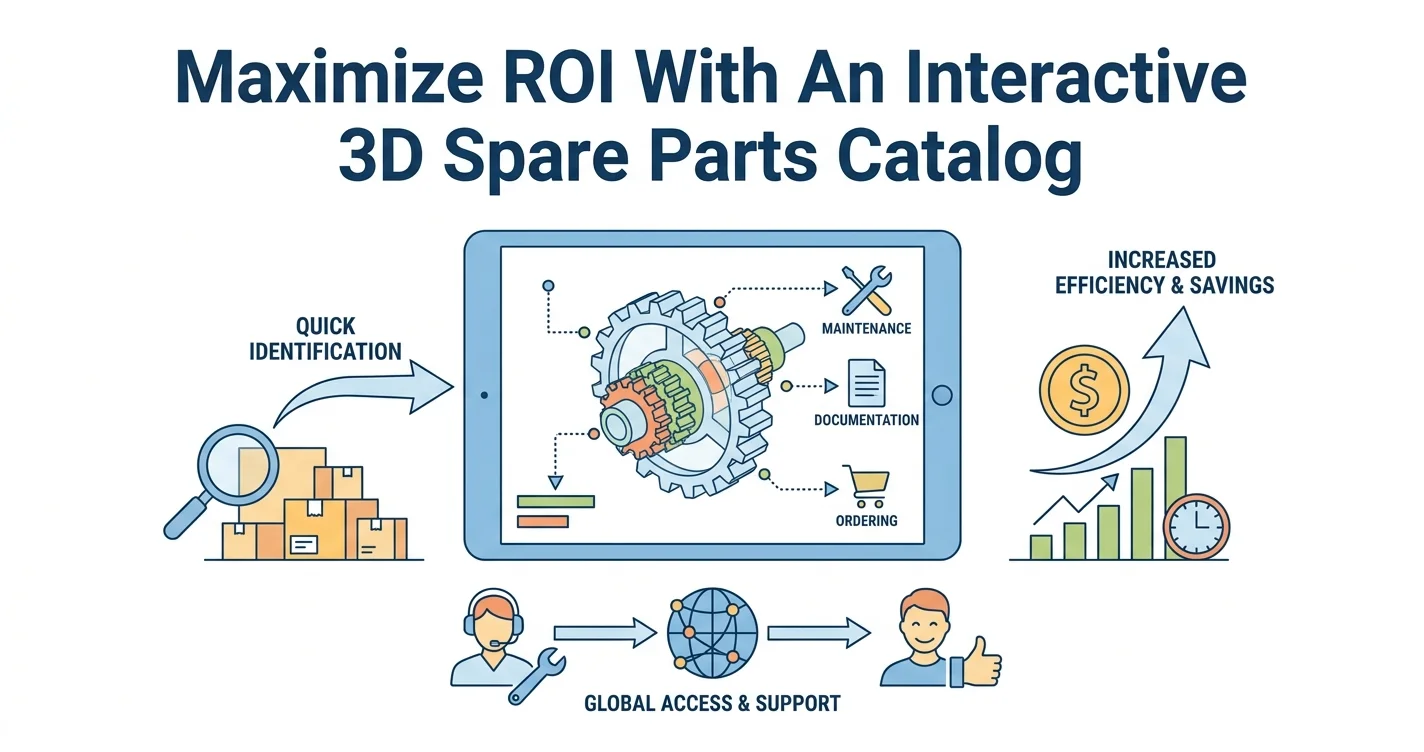
Dealers and field technicians abandon your brand when they cannot confidently identify the component they need to repair a machine. An interactive 3D spare parts catalog stops this abandonment by replacing static, text-heavy PDF manuals with a visual ordering experience. Upgrading to a digital B2B e-commerce platform eliminates order errors, boosts first-time-fix rates, and captures aftermarket revenue that bleeds to third-party competitors. To protect your market share, Systems Online provides the software to make this transition, turning your complex schematics into an integrated, multi-channel e-commerce portal.
The High Cost of Poor Aftermarket Experiences
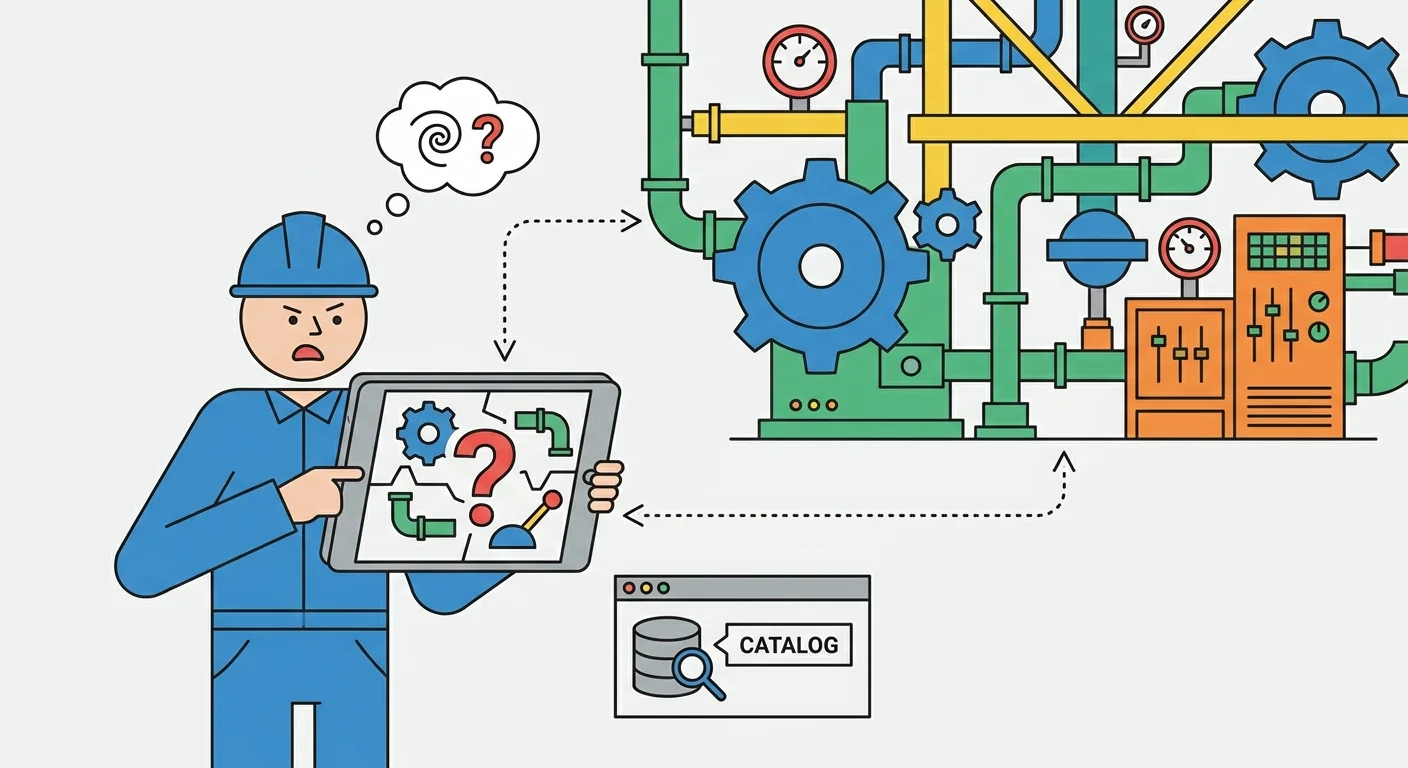
While overall figures vary across specific heavy machinery and industrial sectors, the global automotive aftermarket parts market alone will reach an estimated $813.26 billion by 2033, demonstrating why replacement parts are a primary growth engine for equipment manufacturers. Capturing that revenue requires providing a frictionless ordering process, but OEMs currently lose a significant portion of parts revenue to non-OEM sellers across broad equipment categories. This loss stems directly from buyer frustration with legacy ordering systems. When a dealer has to cross-reference a dense 500-page paper manual against a confusing spreadsheet to find a replacement pump, they leave to find an easier supplier.
This friction destroys brand loyalty, as B2B buyers expect an e-commerce journey that mirrors their consumer shopping habits. Upgrading from a static text-based portal to a high-definition virtual discovery platform keeps buyers inside your ecosystem. Deploying electronic parts catalog software bridges the gap between physical reality and digital ordering by replacing black-and-white 2D schematics with interactive models. To uncover the immediate ROI of upgrading your portal, calculate your current aftermarket capture rate by comparing the total parts required to service active field equipment against your actual parts revenue.
Reviewing your existing order defect rate reveals the true cost of poor identification. Every time a customer orders the wrong component, they tie up capital, pay return shipping, and delay a repair, while customer service representatives waste hours processing returns and walking angry technicians through manuals. These hidden costs erode profit margins. Calculate the internal labor cost of your current return rate, then add the estimated value of lost sales when a buyer gives up and sources a generic alternative. Fixing this identification workflow immediately improves profitability across the entire dealer network.
How An Interactive 3D Spare Parts Catalog Fixes the Ordering Process
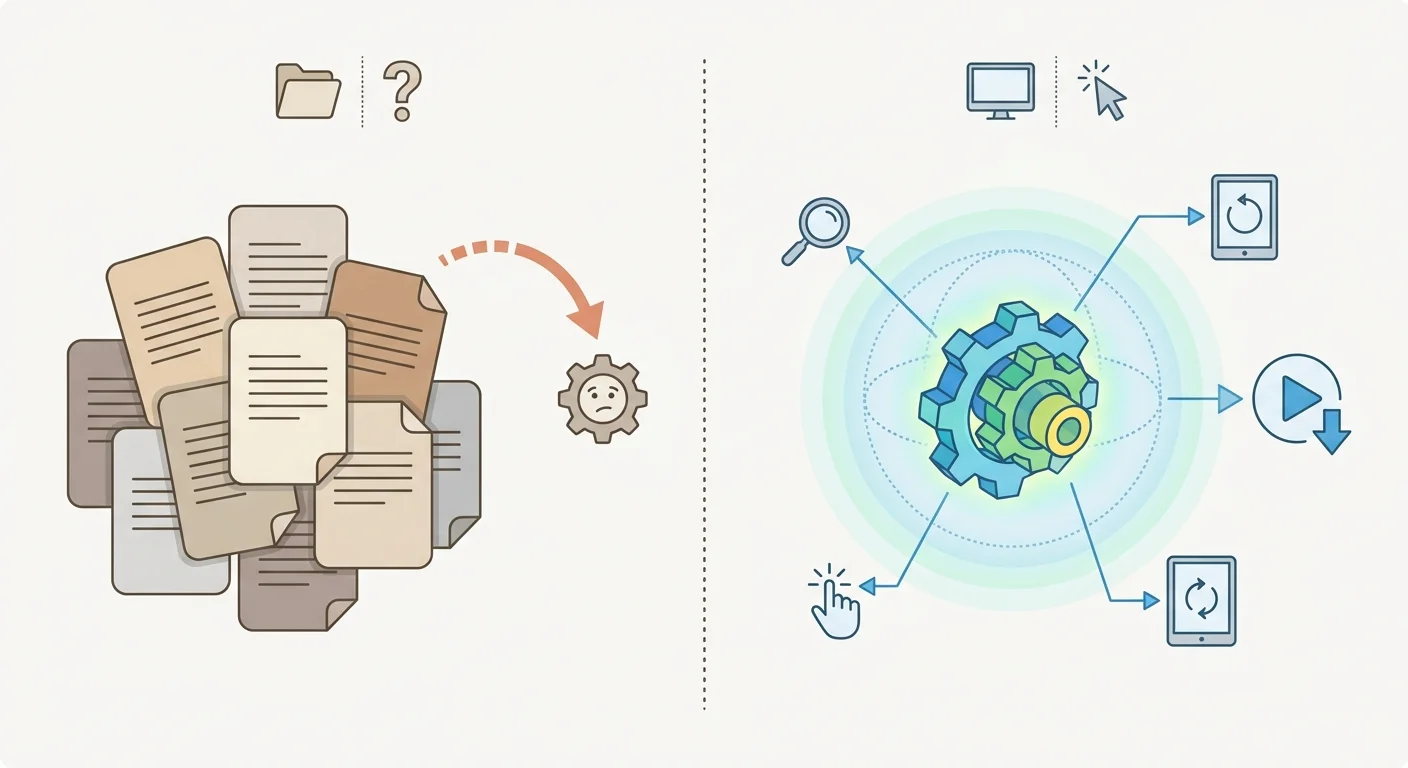
Because static PDFs force technicians to guess, a line drawing of a complex multi-stage hydraulic cylinder rarely provides enough spatial context to distinguish between three nearly identical O-rings. An interactive 3D spare parts catalog solves this by allowing users to rotate, pan, and zoom into an exploded view of the exact assembly. Visualizing the component in three dimensions removes the guesswork from part identification, letting users see the physical relationship between parts and match the screen geometry directly to the broken machine.
This visual clarity yields immediate operational improvements. Industrial enterprises deploying integrated digital platforms average a 31% improvement in first-time-fix rates and an 18.3% reduction in standing inventory. Technicians fix the machine correctly on the first visit because they ordered the right part on the first try, which means dealers stock fewer redundant components for secondary repairs. The entire supply chain becomes leaner when users trust the identification process.
Catalog software must feature multi-shape hotspots, rendering the entire 3D model interactive rather than displaying an embedded static image. When a technician clicks a specific visual component on the screen, the software must highlight the corresponding row in the Bill of Materials, while clicking a row in the BOM should trigger the reverse action on the model. This bidirectional linking ensures buyers visually verify exact components before adding them to the cart. To audit your current workflow, time how long a new technician takes to locate a secondary sub-assembly part; if the process takes more than two minutes, the system requires an overhaul. Require your platform provider to handle complex assemblies by allowing users to hide outer casings or structural elements to expose internal workings. By replicating the physical teardown process, this spatial manipulation lets technicians identify internal wear items without physically dismantling the machine, saving hours of diagnostic labor and preventing unnecessary equipment downtime.
Key Catalog Features That Drive Average Order Value
Replacing obsolete parts introduces another layer of ordering friction. Because manufacturers constantly update components, the original part number stamped on a ten-year-old machine often no longer exists in the current database. Without a system to manage these changes, a buyer searches for the old number, receives a zero-results error, and leaves to find a third-party alternative. Managing this lifecycle data requires dedicated database logic built specifically for the heavy equipment industry.
Automated supersession management captures these lost sales by tracking part lifecycles and redirecting buyers. When a technician enters an outdated part number, Systems Online’s platform automatically serves the newest compatible replacement and displays a clear audit trail of the part's history, giving the buyer confidence that the new component will fit the old machine. Configure your database rules to enforce these supersession chains by updating your master item records so every obsolete part points directly to its active successor. Providing this transparency prevents the buyer from abandoning the cart out of confusion.
Grouping related components into functional kits increases your average order value. If a buyer needs to replace a water pump, they also need the corresponding gaskets, mounting bolts, and seals. Presenting the pump as a standalone item guarantees the technician will forget the secondary hardware, resulting in a delayed repair and a frustrated customer. Build digital kits within your interactive 3D spare parts catalog to prompt the inclusion of all required components automatically, so when the buyer selects the primary pump, the interface suggests adding the complete rebuild kit to the cart. This grouping strategy mirrors the logic of a skilled service advisor to ensure a successful repair while increasing the total transaction value. Review your top ten most frequently ordered primary components, identify the supplementary hardware required to install each one successfully, and map these relationships in your database to display them as a unified visual assembly. This proactive upselling reduces secondary emergency orders and helps your dealer network maintain higher customer satisfaction scores.
Ensuring Accessibility in Disconnected Environments
Heavy machinery rarely breaks down in an office with a high-speed fiber connection. Field technicians service agricultural equipment in remote fields, repair mining drills deep underground, and maintain generators on offshore oil rigs, where a cloud-only SaaS catalog fails the moment the cellular signal drops. If the technician cannot access the schematics, the repair stops, forcing them to drive back to town, identify the part, and return to the site the next day. This connectivity failure increases equipment downtime.
Deploying a multi-channel delivery framework solves this connectivity gap by providing robust offline access without sacrificing functionality. Systems Online delivers this through a hybrid approach that serves both connected and disconnected users from the same data set. Field service teams install native mobile applications that sync the entire catalog locally to their iOS or Android devices. When the technician enters a dead zone, the app transitions to the local data so they retain full access to interactive 3D models, BOMs, and supersession data without a live internet connection.
Providing offline distributed media options supports technicians in isolated environments. Equip your team with ruggedized USB drives loaded with the interactive catalog, allowing them to plug into a laptop and access complex sub-assemblies miles away from a cell tower. Require your technicians to sync their mobile applications or update their physical media weekly to ensure they carry the latest pricing, availability, and supersession chains into the field. Because relying solely on web-based portals creates vulnerabilities for manufacturers with a global service footprint, selecting a platform designed for remote industrial environments guarantees continuous access. By accounting for the physical constraints of the technician's working conditions, your software architecture prevents costly diagnostic delays.

Integrating Your Catalog with Enterprise Systems
A standalone parts catalog creates redundant data entry and guarantees inventory discrepancies. If the catalog does not communicate with your enterprise resource planning (ERP) system, buyers will order out-of-stock parts, forcing customer service teams to manually call the dealer and cancel the order. This damages your brand's reliability rating by forcing internal teams to act as manual data couriers between the web portal and the warehouse software.
Modernize backend connectivity by integrating your catalog with your ERP through open APIs that connect to systems like SAP, Oracle, Epicor, and Dynamics. This connection syncs real-time pricing and exact warehouse availability to the user interface, meaning a dealer sees their negotiated pricing tiers and accurate stock counts before they click the add-to-cart button. Audit your current architecture to document every point where a human manually transfers order data between systems, then eliminate those touchpoints by implementing automated order insertion. An integrated system captures the order in the web interface and routes it straight to the warehouse floor for fulfillment without human intervention.
Configure Punchout capabilities to streamline the purchasing workflow for large B2B buyers who refuse to manage procurement across dozens of different supplier websites. Punchout technology allows these enterprise dealers to initiate a session from their own procurement software, browse your interactive 3D spare parts catalog, identify components, and securely transfer the populated cart back into their own system for internal approval. This data exchange reduces administrative overhead for your biggest clients and makes your brand easier to do business with. Securing a larger share of your dealers' recurring parts budget requires removing the friction of manual purchase order creation. Map your top enterprise accounts, determine which procurement platforms they utilize, and configure your catalog to accept Punchout requests from those specific systems to lock in their purchasing volume.
Adopting Single-Source Publishing for Absolute Accuracy
Managing separate databases for your web portal, mobile app, and printed manuals guarantees version conflicts. If an engineering team updates a part specification but the technical publications team fails to update the PDF files, technicians will order the wrong component. Maintaining multiple data silos scales poorly and introduces liability when handling critical machinery updates, because every time a technical writer copies data from an engineering repository into a publishing tool, they risk introducing a typographical error that breaks an ordering chain.
Single-source publishing eliminates these discrepancies by centralizing all parts data into one unified database that serves as the single source of truth for the entire organization. Updating a BOM or adding a new supersession rule propagates that change across every delivery channel, ensuring the web portal, native mobile applications, and offline distributed media all pull from the exact same master record. Evaluate your current publishing workflow and consolidate fragmented data streams into one central repository, saving overhead by not paying technical writers to manually re-enter data that already exists in your engineering systems.
This unified approach reduces the manual labor required to produce the physical documentation that dealerships and regulatory bodies still require for compliance and archiving. Systems Online uses its single source of truth through an automated print engine to dynamically generate branded physical and PDF parts books from the digital data. Bypassing the slow desktop publishing process, the system automatically flows visual schematics, indices, and BOM tables into your corporate templates. Transitioning to dynamic publishing guarantees that your legacy printed materials match your interactive digital environments with strict precision. Measure the hours your team currently spends formatting printed manuals in desktop publishing software; reallocating those hours to catalog enrichment provides an immediate return on your software investment.
Stop losing aftermarket revenue to third-party suppliers and start delivering a frictionless B2B e-commerce experience. Upgrading your legacy PDFs to an interactive, multi-channel platform eliminates order errors and keeps your equipment running. Visit Systems Online to see how EzParts can digitize your complex schematics and integrate with your ERP today.
Modified on: 07/18/2026