Blog » Optimizing Supersession Management In Aftermarket Sales
Optimizing Supersession Management In Aftermarket Sales
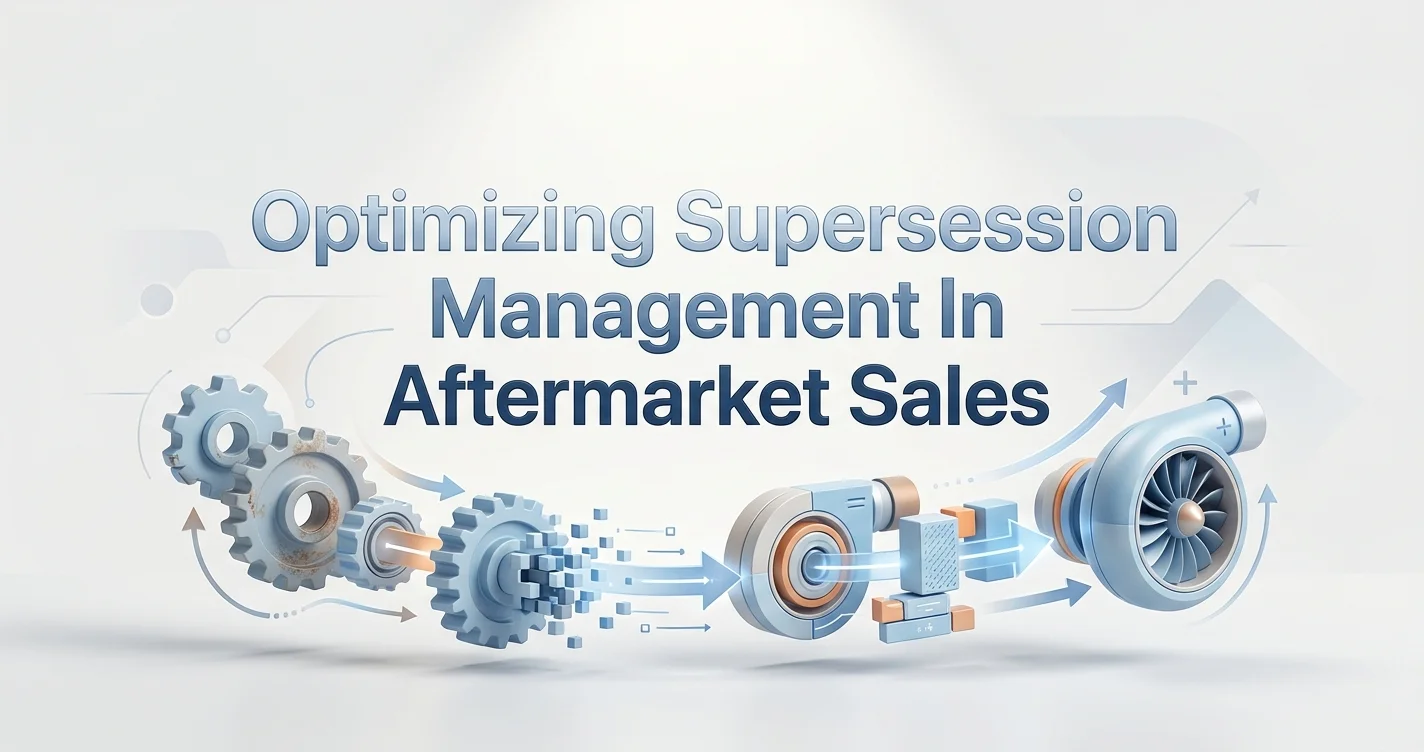
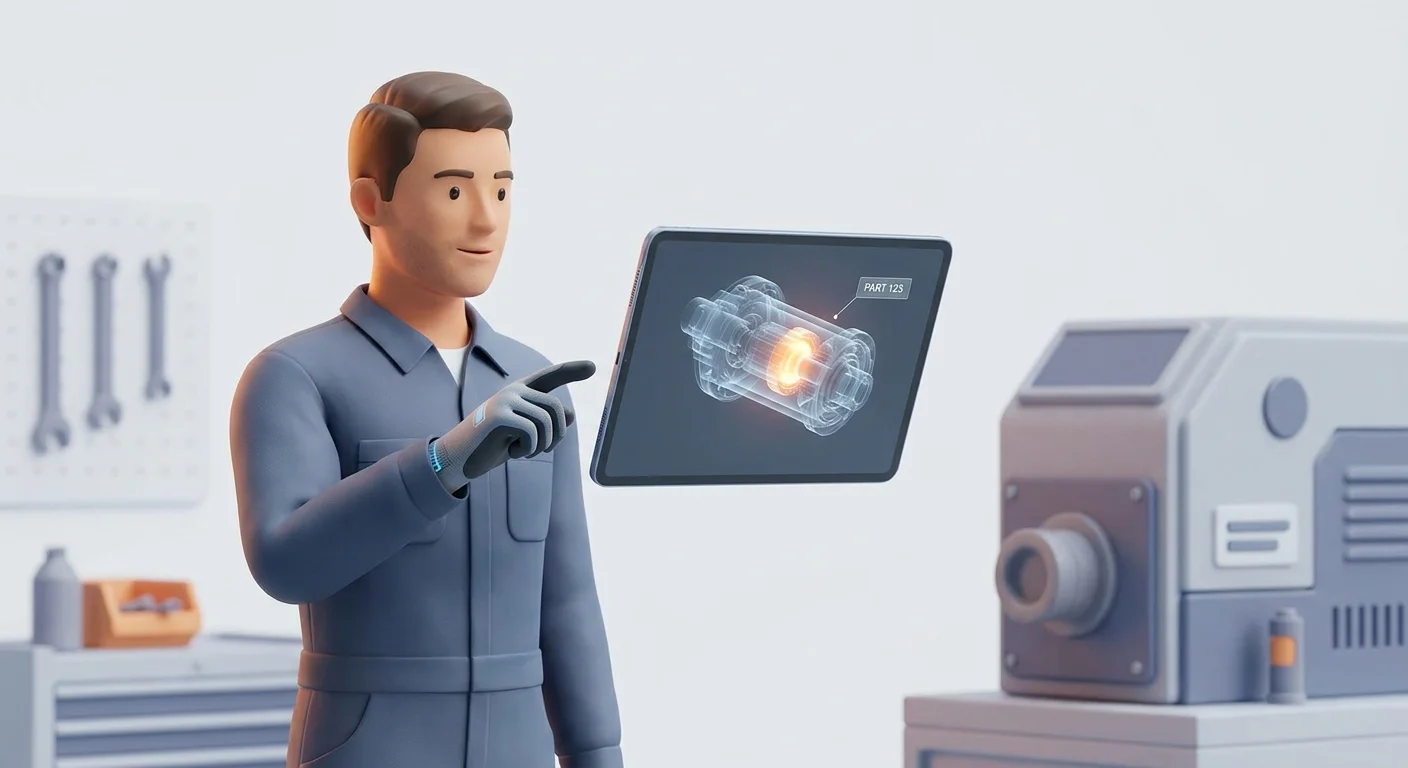
A technician tears down a hydraulic pump in the field, finds a cracked housing, and types the stamped part number into the dealer portal. The portal says the component is obsolete and offers no replacement. Facing a dead end, the technician orders an entirely new pump assembly, costing the customer thousands of dollars and delaying the repair by three days. You see this exact scenario play out daily across heavy equipment and automotive sectors. Nearly 10 percent of aftermarket returns happen because of incorrect spare parts orders, which creates an estimated $15 billion problem across the industry.
Effective supersession management in aftermarket sales eliminates this dead end, stops ordering errors, and keeps equipment running efficiently. When Original Equipment Manufacturers (OEMs) modify parts for durability, switch suppliers, or update materials to meet compliance standards, the original component receives a successor. Tracking these changes ensures the replacement part flows to the technician without interruption. Systems Online builds the software that connects these engineering changes directly to the field. Using the EzParts platform, manufacturers distribute real-time replacement data across dealer networks and independent shops, which prevents the confusion that drives costly misorders.
The High Cost of Broken Supersession Chains
Part supersession is the systematic tracking of components upgraded or replaced by an OEM. An engineering change order triggers the replacement, meaning a bracket might change from stamped steel to cast aluminum, prompting the enterprise resource planning (ERP) system to record a new stock keeping unit (SKU). If that database update fails to reach the field catalog, the chain breaks. Supply chain audits frequently reveal severe data gaps across industry catalogs. Incomplete supersession links often miss a critical connecting node in the chain, point to dead-end superseded numbers, or lack replacement data entirely despite the manufacturer officially issuing a replacement.
Returns require reverse logistics, manual inspection, repackaging, and restocking, while the customer experiences prolonged downtime waiting for the correct item. You can reduce spare parts ordering errors by mapping exact replacement paths so a buyer requesting a discontinued SKU instantly sees the active replacement option.
Manufacturers deal with complex, multi-hop chains where Part A replaces Part B, which eventually gets replaced by Part C. If the catalog only knows that Part A points to Part B, a technician searching for Part A hits a discontinued wall because Part B is also out of stock. To prevent this, the system must recursively resolve the entire chain until it identifies the final active component. This recursive resolution stops technicians from giving up on a repair when they see an obsolete tag.
| Supply Chain Node | Symptom of a Broken Chain | Direct Financial Impact |
|---|---|---|
| Warehouse | Discontinued parts lose connection to active equipment demand, leaving older but viable SKUs sitting in bins indefinitely while new shipments arrive. | Frozen capital from dead stock accumulation, requiring expensive warehouse expansion to house orphaned inventory. |
| Dealership | Parts counter personnel enter the stamped number into the dealer portal, find no active successor link, and turn the customer away empty-handed. | Lost sale to a third-party aftermarket competitor, permanently damaging dealer trust and service reputation. |
| Field Technician | Incorrect earlier-generation part is ordered using outdated paper manuals, resulting in incompatible fitment during on-site installation. | Extended equipment downtime, frustrated end-users, and compounded reverse logistics costs to process the return. |
Map your existing chains to identify these dead ends by exporting your supersession database and running a recursive script to follow every replacement link to its terminus. Flag any chain that ends on a SKU marked as obsolete, as these represent your broken links. Once you identify them, assign an engineer to verify the final active replacement and update the terminal node in the database. When you fix the final hop, the entire historical chain instantly reconnects to live inventory.
Why Legacy Parts Catalogs Create Dead Stock
Manual tracking freezes capital on warehouse shelves because when a manufacturer publishes a static PDF catalog, the data degrades the second the file exports. Six months later, engineering supersedes a bearing, but the PDF continues to list the old component. Dealerships stop ordering the original part because they believe it is unavailable, or they submit an order that the warehouse rejects. Weak supersession management acts as one of the top causes of excess and obsolete inventory, because failure to link old stock to new demand causes prior iterations to rot on shelves.
This orphaned inventory sits in bins indefinitely, and because the catalog no longer connects the component to equipment demand, the asset wastes away on the shelf. You must connect demand to older inventory to protect your margins.
Consumers and fleet operators increasingly rely on independent technicians rather than OEM-authorized service centers. The 2025 Automotive Aftermarket Pulse report by Roland Berger noted that 57 percent of consumers now choose independent aftermarket parts over OEM alternatives, an increase of 14 percentage points from the previous year. This rate varies by region, as OEM repair shops remain highly popular in markets like China. Similarly, US consumer preference for independent repair shops over OEM-authorized centers grew from 50 percent in 2023 to 56 percent in 2024. The case for independent repair access forces manufacturers to rethink how they distribute technical data, especially since independent shops service multiple brands and rely heavily on digital portals to identify components. If your portal serves outdated numbers or fails to link successors, the independent technician abandons the repair or sources a generic aftermarket alternative, costing the OEM the revenue entirely.
To capture these sales, you must establish an aftermarket eCommerce platform for manufacturers that unifies your inventory data. Every obsolete number entered into the search bar must forward the buyer to the current active component with an explanation of the change. Providing this context prevents the buyer from assuming the site delivered an incorrect search result.
Run a query in your inventory management system for SKUs with zero sales in the trailing twelve months that also lack a successor link in the database. Cross-referencing this list with your engineering change logs reveals viable parts that lost their catalog visibility. Restore their fitment data in the portal to clear out the stagnant inventory.
Integrating ERP and EPC for Supersession Management in Aftermarket Sales
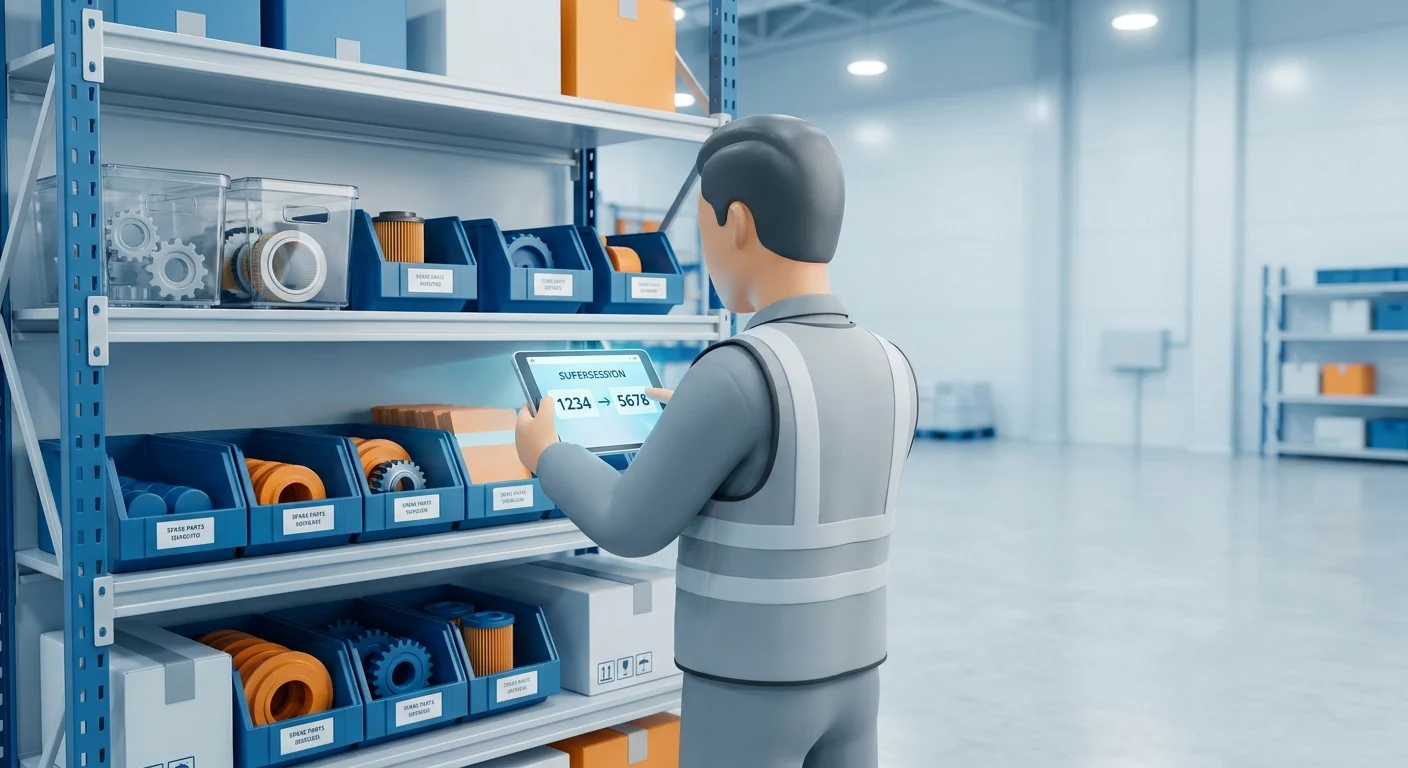
Treating parts catalogs as downstream publishing targets creates data lag. Manufacturers fix this by natively integrating their ERP software with their electronic parts catalog (EPC) so engineering data dictates field availability in real time. Leading aftermarket strategies now natively tie the EPC directly to the ERP, rather than treating the catalog as an isolated downstream document. This unification ensures that a supersession triggered by engineering changes instantly renders the old part unavailable in the dealer portal while preserving its visual schematic for the technician.
Systems managing parts distribution use publish gates to enforce data integrity. Platforms like Apimio increasingly employ publish gates that automatically block the distribution of new part catalogs or eCommerce listings if a supersession chain lacks backward-compatible fitment data. These gates act as quality guards, running an automated check before pushing an engineering update to the field catalog. If an engineer supersedes a part in the ERP but fails to specify which prior equipment models the new component fits, the gate blocks the update. This backward-compatibility requirement ensures technicians never see a new part without knowing exactly which older machines accept it.
Systems Online natively handles this complex data transfer, and the EzParts platform processes multi-hop replacement chains automatically by pulling data directly from ERPs like SAP, Oracle, and Dynamics. Configuring a material master record with a supersession relationship in SAP triggers an immediate update in the EzParts cloud portal. The obsolete part renders unavailable for purchase, yet its visual representation remains on the schematic.
When a technician clicks the original part on the drawing, the software reads the underlying chain logic and places the new active SKU into the integrated shopping cart, eliminating the need to manually cross-reference service bulletins.
EzParts also features an automated print engine for environments requiring physical documentation. The software dynamically generates branded PDF parts books on the fly based on the live database, providing dealers with a document reflecting the exact bill of materials and replacement chains active at that specific second. This prevents outdated static PDFs from circulating across dealer networks.
Set up API triggers between your ERP and your catalog. You can rely on electronic parts catalog import automation to push delta updates nightly. A delta update only transfers the records changed in the last 24 hours, keeping bandwidth usage low and ensuring your dealer portal reflects yesterday's engineering changes by the time technicians clock in today.

Field Execution: Keeping Technicians Accurate
Field service technicians work under severe time constraints and require precision rather than multiple-choice options, especially since a single machine model might undergo dozens of minor revisions during a production year.
Serial and Vehicle Identification Number (VIN) filtering locks catalog searches to specific machine generations. Supersessions often depend heavily on the original production date. A tractor manufactured in January often uses a different hydraulic valve block than the exact same model built in October. Strict serial number filtering processes the bill of materials configuration to ensure the technician only sees the replacement part valid for their exact unit. If a successor part only fits machines built after July, entering a January serial number hides the incompatible successor and displays the correct alternative.
Interactive 2D and 3D schematics map these complex assemblies visually using multi-shape hotspots. The software processes the supersession logic in the background when a technician selects a component. The user sees the visual representation they recognize from the physical machine, clicks it, and receives the correct part number regardless of how many times engineering updated it.
Offline capabilities define field readiness because technicians working in underground mines, remote agricultural fields, or secure military installations lack internet access. They rely on distributed media to look up schematics. Systems Online builds media-based electronic parts catalog software that synchronizes replacement chains to localized offline databases.
When a technician clicks a hotspot offline, the local database cross-references the downloaded chains and queues the valid active part to ensure they add the current component to their cart. Once the technician returns to a connectivity zone, the cart uploads the exact inventory request to the dealer portal.
Require serial number entry before granting access to sub-assembly schematics in your portal. Configuring your interface to prompt for the machine identification immediately after login restricts the data pool to valid fitments and lowers the chance of a technician guessing the wrong variant.
Core Best Practices for Inventory Control
Inventory depletion rules determine the profitability of an aftermarket operation, and managing successors incorrectly forces viable parts into obsolescence.
Enforce consume-first depletion rules in your warehouse management system. When an engineering change occurs for a non-critical reason, such as a switch from a painted finish to a powder-coated finish, configure the system to sell the remaining original stock before offering the new SKU. The ERP flags the original inventory as active until the bin quantity hits zero, and only then does the catalog allow dealerships to place orders against the successor part. Utilizing this logic minimizes premature obsolescence.
Safety mandates require an immediate exception to this rule. If a component fails safety standards or triggers a recall, the consume-first logic must be overridden. The ERP must quarantine the older stock globally and force all catalog queries directly to the successor part. Failing to trace these replacements during a recall multiplies reverse logistics costs and exposes the manufacturer to liability. Incomplete aftermarket part traceability and supersession visibility cause recall and warranty costs to multiply three to five times.
Deploy automated scripts to monitor parts catalogs for broken links continuously. Moving away from manual semi-annual inventory reviews prevents data degradation, so rely on an automated auditing tool to scan the database nightly, flagging any supersession chain that leads to a discontinued SKU without a forward pointer. AI-driven platforms are continuously monitoring parts catalogs for supersession breaks, equipment retirements, and declining failure mode relevance. Identifying dead stock and missing links through this continuous obsolescence pipeline addresses data breaks before they freeze capital.
Establish a centralized database across your entire supply chain to function as a Single Source of Truth. A replacement triggered by an engineering change order must update the SaaS cloud portal, the native mobile application, the offline media database, and the B2B eCommerce cart simultaneously.
Configure inventory hard-stops in your ERP today by selecting a sample group of non-critical superseded parts and applying a strict consume-first flag. Track the depletion rate of the original bins over thirty days. You will recover capital previously trapped in older inventory while ensuring your customers receive parts that fit their equipment.
Ready to eliminate aftermarket ordering errors and boost your parts sales? Systems Online provides multi-channel, interactive electronic parts catalogs that integrate directly with your ERP to automate supersession management. Ensure your technicians and dealers always order the right part, whether they are online, mobile, or entirely offline.
Modified on: 07/31/2026