Blog » How To Choose An Aftermarket Ecommerce Platform For Manufacturers
How To Choose An Aftermarket Ecommerce Platform For Manufacturers
A field technician needs a replacement hydraulic valve for a stalled combine harvester, but the paper manual lists a part number the manufacturer discontinued three years ago. By the time the dealer figures out the correct replacement component, hours of prime harvest time evaporate. Implementing a modern aftermarket ecommerce platform for manufacturers solves this mismatch by replacing static documents with live, interactive inventory streams.
Equipment sales drive initial growth, but the parts business funds long-term operations. Capturing that revenue requires upgrading how your dealer network and service teams identify and order replacement components based on specific technical criteria, deployment models, and capabilities needed to digitize complex equipment inventories.
Why You Need An Aftermarket Ecommerce Platform For Manufacturers
Selling original equipment establishes your market footprint, but servicing that machinery generates the profit. Deloitte Insights analysts report that aftermarket margins run more than two times higher than new equipment sales across broad manufacturing sectors. That gap expands further in heavy industry, where Mirakl data puts spare parts margins up to four times higher than the original machinery. Buyers are already spending this money, and aftermarket product revenue outpaces new product growth.
Capturing those margins requires mitigating the massive cost of offline machinery, as unplanned downtime creates financial strain for heavy industry plants, and these costs often run higher in sectors like automotive. Because unplanned downtime damages client profitability, every minute a dealer spends guessing at a part number drains revenue from the end user's operation.
Systems Online developed the EzParts electronic parts catalog (EPC) for OEMs facing this problem. Transitioning from legacy PDFs to a digital environment eliminates the ordering errors that cause return shipping bloat. When evaluating your wider strategy for how to increase aftermarket parts sales, migrating static data into a searchable, interactive catalog establishes the necessary technical foundation.
Audit your current revenue split between new equipment and spare parts. If parts revenue falls below 30% of total gross, your legacy cataloging system likely frustrates buyers into purchasing third-party aftermarket alternatives.

Criterion 1: Visual Parts Identification & 2D/3D Hotspotting
Text-based searches fail in industrial manufacturing because nomenclature changes across engineering generations, meaning a buyer might search for a "flange" while the system lists a "mounting bracket assembly."
Because millennials and Gen Z now make up 71% of B2B buyers, a figure that varies slightly by specific manufacturing sector, they demand consumer-grade experiences where they can interact with the equipment digitally rather than parse text-heavy list views that trigger high abandonment rates.
Modern platforms solve nomenclature mismatches through interactive 2D and 3D schematics by taking raw CAD files and applying multi-shape hotspots over individual components. When a dealer views an exploded 3D model of a transmission, they rotate it on their screen and click the specific gear they need. The software then highlights the corresponding line item in the Bill of Materials (BOM) below the image, allowing the user to add the component to an integrated shopping cart with a single click.
Replacing text lookup with visual confirmation drops parts ordering errors by up to 35% according to Aberdeen Group research, though this reduction depends on the baseline complexity of the catalog. This happens because the buyer confirms the physical location of the component in the assembly before ordering.
Test candidate platforms by uploading a complex 3D assembly from your current engineering files. Ask the vendor to demonstrate how long it takes to apply hotspots to a 50-part schematic, as relying on manual HTML coding or third-party agencies proves the software lacks the automated publishing tools required for enterprise deployment on an online electronic parts catalog.
Criterion 2: BOM Traceability and Serial Number Filtering
Dealers build up "shadow inventory" when they lack confidence in part fitment. Unsure if a 2022 tractor takes a Type A or Type B filter, a service center will order both to ensure the mechanic has the necessary hardware, which leaves the unused filter on a shelf to inflate inventory costs and trigger expensive returns.
Strict fitment verification eliminates this shadow inventory by requiring a platform that filters components by Vehicle Identification Number (VIN) or serial number. When a user inputs the machine's specific serial number, the platform references the exact build record from the factory to hide every schematic, option, and part number that does not belong to that unit. This ensures the dealer sees the components installed on the specific machine sitting in their bay.
Supersession management dictates the remainder of the ordering flow. Because engineering departments constantly improve components, part numbers from a 2018 manual often point to obsolete items years later. If a catalog relies on human memory to track which new part replaced the old one, the resulting order fails.
Systems Online automates supersession chains natively within the EzParts platform. When a buyer clicks a discontinued part number on an older schematic, the system redirects them to the newest iteration and flags associated kits, ensuring they purchase the required mounting hardware alongside the new component.
Provide software vendors with a multi-level BOM where a sub-component underwent a part number change three years ago. Verify that typing the old number presents the current replacement part without requiring the user to navigate a separate lookup table.
Criterion 3: Deep Native ERP Synchronizations
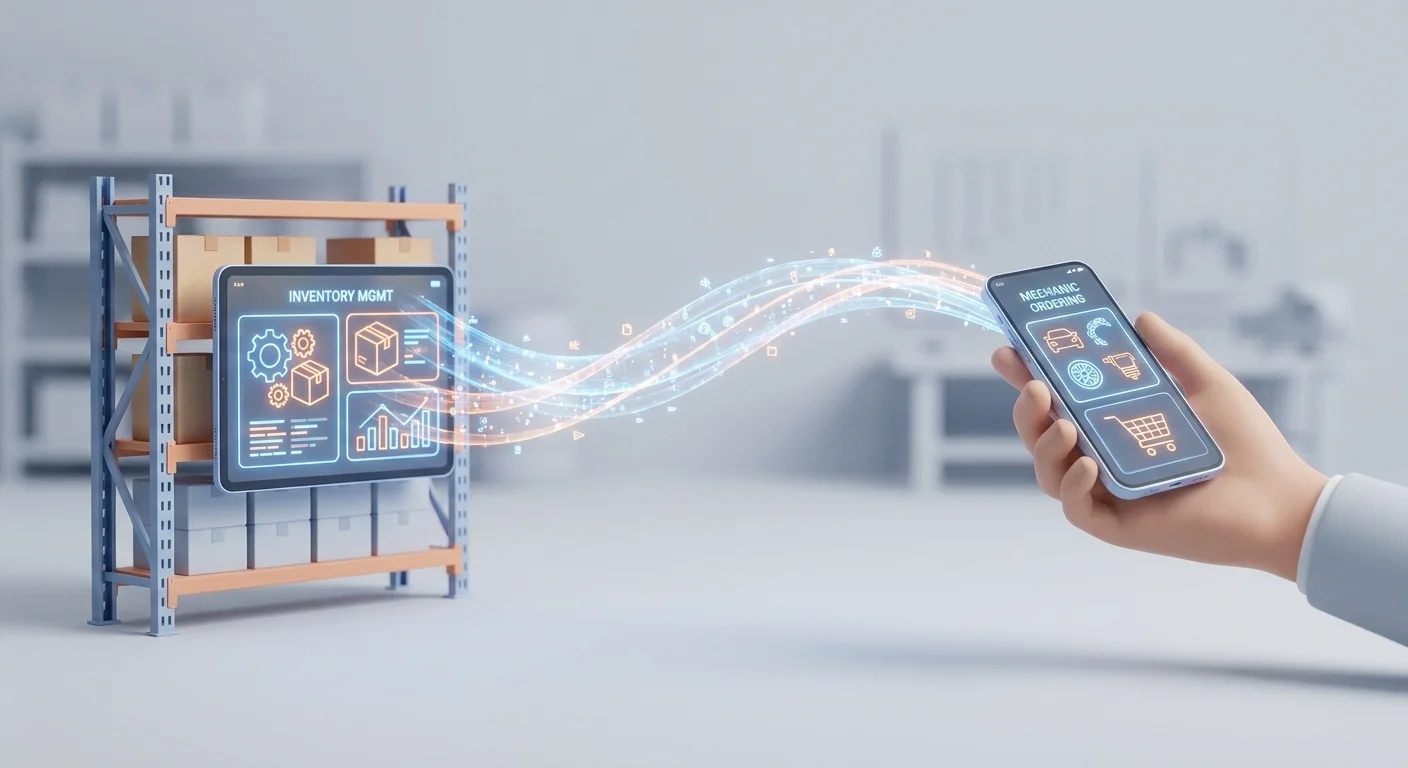
A catalog serves as an interface, while the data governing transactions lives inside your Enterprise Resource Planning (ERP) software. When evaluating an aftermarket ecommerce platform for manufacturers, buyers often expect the portal to replace their existing ERP. Instead, the platform interfaces with the ERP to display existing business logic to the end user.
Static portals upload inventory spreadsheets once a week, which creates a dangerous liability when dealing with complex industrial machinery. If a dealer orders a critical motor that went out of stock two hours prior, the resulting delay damages the manufacturer's reputation and halts production.
Require deep, native ERP software integrations that pull live data. By connecting with SAP, Oracle, Epicor, and Dynamics, Systems Online allows the platform to query the ERP in milliseconds when a user clicks a hotspot, displaying real-time availability and customer-specific pricing tiers based on the dealer's contract.
This synchronization prepares manufacturers for the shift toward agentic commerce. Because industry projections suggest that 40% of enterprise applications will feature autonomous AI agents by 2026, maintaining clean data streams is mandatory. AI tools cannot automate reordering or forecast demand if they pull from siloed, static catalogs.
Check the candidate platform's API documentation to confirm that price lookups, inventory checks, and final order insertions happen dynamically via web services rather than relying on batch file transfers at midnight.

Criterion 4: Disconnected Access for Field Service Technicians
Industrial equipment operates where internet connectivity fails, as mining excavators, agricultural combines, and offshore drilling rigs require onsite maintenance in cellular dead zones. A cloud-only catalog forces field technicians to download massive PDFs before they dispatch, returning them to the static document problem your software upgrade intended to solve.
First-time fix rates plummet when technicians guess at repairs without accurate schematics, so an aftermarket platform must deliver data through multiple channels that target the remote environments where your machines operate.
Systems Online builds its architecture around multi-channel delivery. While authorized dealers use the cloud-hosted SaaS environment, EzParts provides native mobile catalog access and distributed offline media for field technicians by installing locally on a ruggedized Windows tablet or native iOS/Android application.
Technicians interact with 3D schematics, track supersessions, and build parts lists disconnected from the web while the application stores their shopping cart locally. Once the technician drives back into cellular range, the software synchronizes with the main server and pushes the pending order to the ERP.
Require an offline demonstration during your vendor selection process by turning off the Wi-Fi on the presentation device and asking the vendor to pull up a full BOM, rotate a 3D model, and queue an order. If the screen goes blank, the platform will strand your technicians in the field.
Criterion 5: Dynamic Document Generation for Legacy Support
Digital adoption does not happen overnight. Even with a modern platform deployed, segments of your customer base will demand static PDF parts manuals or printed books. Supporting both environments traditionally requires maintaining two separate engineering workflows where one team codes the web catalog while another uses desktop publishing software to build physical books.
Top-tier software combines these workflows using an automated print engine where the platform acts as the single source of truth. The software ingests the raw CAD and ERP data to feed the interactive digital environment and uses that same data to compile physical layouts.
When a dealer requests a traditional manual, the platform dynamically generates a branded, version-controlled PDF parts book on demand. Systems Online features a configurable print engine that applies your corporate branding, inserts tables of contents, and generates indices based on the live database.
This process guarantees the printed manual matches the web catalog, which means when engineering updates a part number in the ERP, the web portal updates instantly and any PDF generated the following minute reflects the same change.
Calculate the annual labor hours your engineering team spends manually typesetting, updating, and distributing static parts catalogs. Use that specific operational cost to build the ROI justification for migrating to a platform that generates these documents automatically.
Decision Framework: Matching Operations to the Right Software
No single software configuration serves every industrial organization in every scenario. Selecting an aftermarket ecommerce platform for manufacturers requires mapping your primary operational bottleneck to the corresponding technical capability, because optimizing for remote field technicians demands different architecture than optimizing for dealer network scale.
Evaluate candidate platforms by matching your most pressing operational problem with the corresponding technical priority.
| Operational Priority | Primary Technical Requirement | The Trade-off to Accept |
|---|---|---|
| Dealer Order Accuracy | 2D/3D Hotspotting & VIN Filtering | Requires upfront work to organize CAD files and serial number data formats. |
| Remote Field Service | Native Mobile Apps & Offline Media | Requires managing localized software updates via synchronization protocols. |
| Real-time Pricing Automation | Deep Native ERP Synchronization (API) | Requires strict data hygiene inside your existing SAP/Oracle/Epicor environment. |
| Legacy PDF Support | Automated Dynamic Print Engine | Requires standardizing your corporate branding templates across all product lines. |
A manufacturer pushing heavy mining equipment prioritizes offline mobile requirements because their end users operate underground. Conversely, a commercial appliance manufacturer prioritizes 2D/3D hotspotting because their authorized repair centers operate on high-speed internet but deal with hundreds of micro-components that look identical in a text list.
Eliminate any software vendor that treats your primary technical requirement as a future roadmap feature rather than a core, existing capability. If a developer promises to build an offline mode specifically for your deployment, your organization ends up paying to fund their research and development. Restrict your shortlist to software platforms that already handle your exact use case in live production environments.
Upgrading your aftermarket infrastructure stops ordering errors and protects high-margin parts revenue. Systems Online delivers the interactive schematics, deep ERP integrations, and offline mobile capabilities manufacturers need to run a profitable service network. Visit Systems Online to see how EzParts translates your engineering data into a high-performance digital catalog.
Modified on: 07/30/2026