Blog » Top Intellinet Systems Electronic Parts Catalog Alternatives in 2026
Top Intellinet Systems Electronic Parts Catalog Alternatives in 2026
Aftermarket services generate margins 2.5 times higher than new equipment sales on average, a figure that varies depending on the specific manufacturing sector. Protecting these margins requires accurate, accessible part identification tools. When dealers and end-users cannot identify the correct component for a machine, they guess. This guessing creates a large volume of returns, wastes support desk hours, and extends costly equipment downtime.
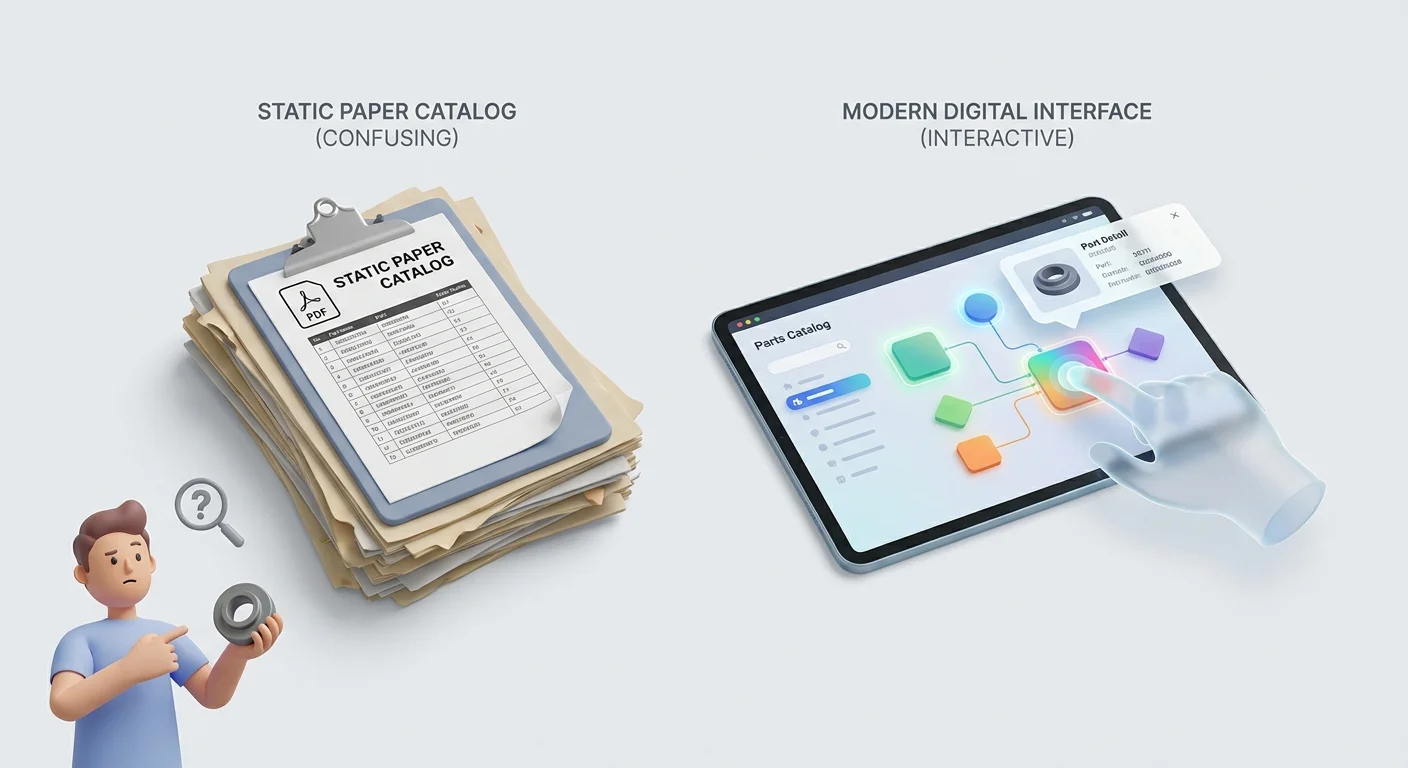
Ordering errors and part misidentification remain common problems because static PDF parts manuals and legacy web portals force buyers to cross-reference visual diagrams manually with disconnected tabular indexes. Modern equipment manufacturers require dynamic platforms that map exact engineering data directly to interactive shopping interfaces.
Because roughly 70% to 80% of B2B decision makers prefer digital self-service, buyers move fluidly between digital portals and offline reference materials while expecting unified ecosystems. Finding an effective Intellinet Systems electronic parts catalog alternative requires evaluating past basic cloud viewers to test how well a platform handles automated print publishing, enterprise resource planning (ERP) sync, and multi-channel delivery. Transitioning to dedicated electronic parts catalog software prevents ordering errors by tying every visual schematic directly to real-time inventory and pricing data.

1. Systems Online (EzParts): Best Overall Alternative
Systems Online provides the premier solution for whole goods manufacturers through the EzParts platform. The system translates complex bills of materials (BOM) into intuitive, interactive 2D and 3D schematics. This software serves a broad user base by handling the deep administrative requirements of original equipment manufacturers (OEMs) while providing frictionless ordering for dealer networks and field service technicians.
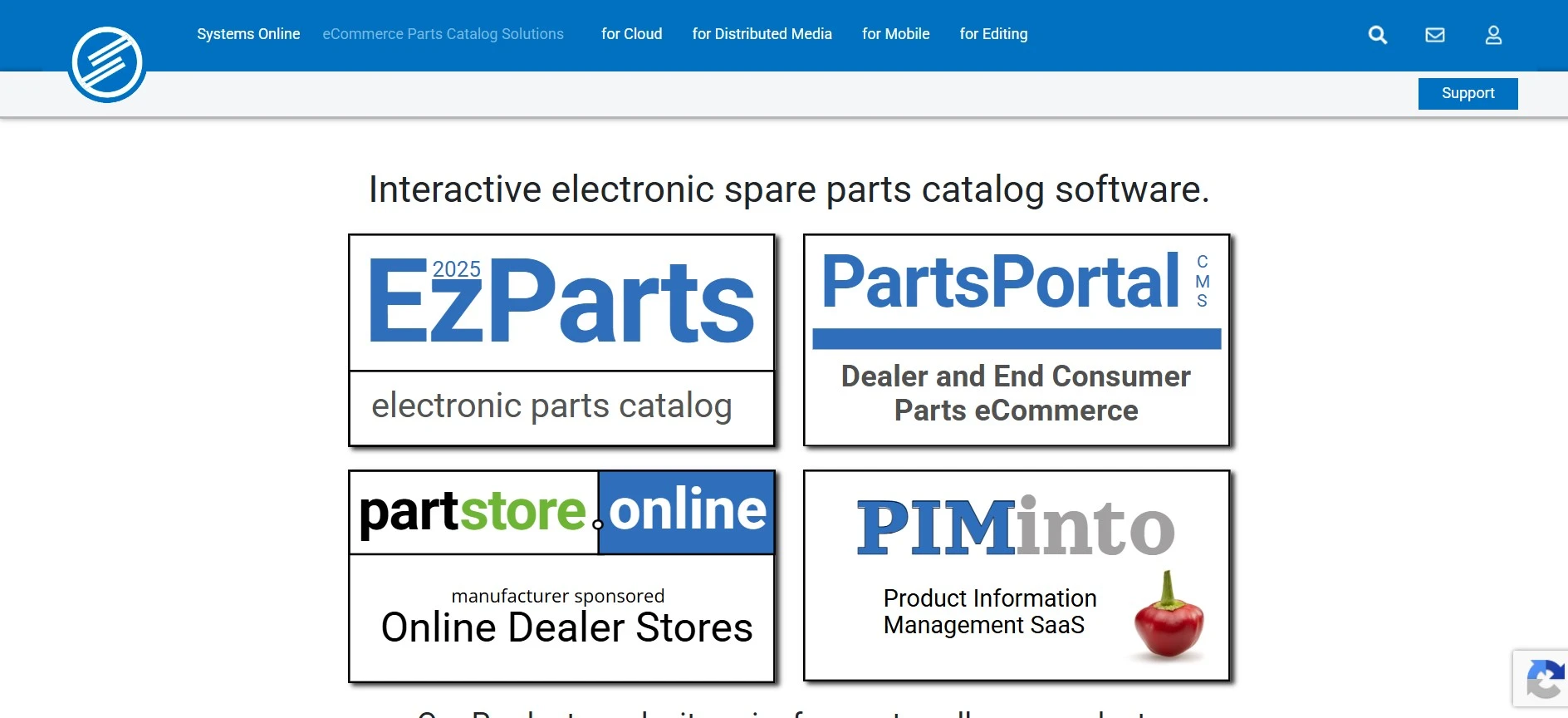
Visual authoring in EzParts relies on precise multi-shape hotspots. The software maps clickable zones to the irregular borders of a gasket, gear, or housing assembly. Clicking the visual component highlights the corresponding row in the associated BOM and adds the correct part number to an integrated shopping cart.
ERP integration dictates the accuracy of any aftermarket portal, and EzParts syncs natively with major enterprise platforms like SAP, Oracle, Epicor, and Dynamics. When a pricing tier changes in your ERP, the catalog reflects that specific price for the authenticated dealer instantly. Inventory checks occur in real time, which prevents buyers from ordering out-of-stock components.
The platform's true differentiator lies in its offline capabilities. Because field technicians working on remote agricultural sites often lack cellular service, EzParts utilizes native offline distributed media to package the entire catalog into installable applications, USBs, or DVDs. Technicians load the catalog on a toughbook, explore the 3D schematic, select the part, and the system queues the order. The cart syncs and places the order the moment the device reconnects to a network.
Schedule a demo with Systems Online to test the automated print engine, which dynamically generates branded PDF parts books directly from your live database to eliminate manual formatting tasks.
2. Documoto: Best for Cloud-Based Publishing
Documoto operates as a popular cloud-based publishing tool that focuses heavily on converting existing PDF documents into clickable web portals. Office-based dealer networks and internal support desks represent the primary target users, as the platform thrives in connected environments where staff have stable, high-speed internet access.
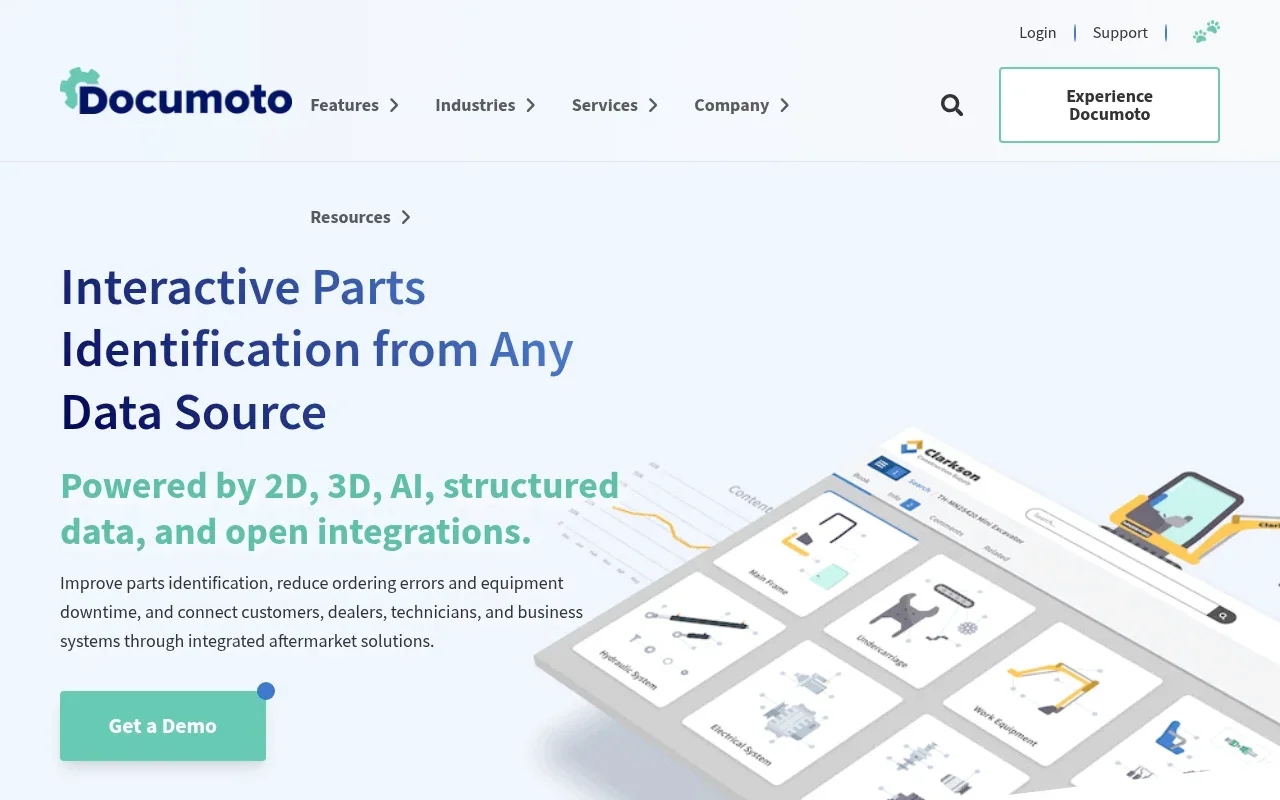
The visual authoring workflow centers on PDF recognition and cloud editing. You upload static pages into the web interface, and the system uses text recognition to help map part numbers to specific page locations. This function works well for manufacturers modernizing an existing archive of paper manuals without redesigning their underlying data structure.
Data synchronization relies on standard API connections to link the cloud catalog with your inventory management systems. Dealers logging into the web portal view current stock levels and standard pricing models based on these feeds.
Unlike EzParts, Documoto requires active web connections, so field mechanics in deep mining sites or remote timber operations lose access to interactive schematics when they lose signal. When evaluating Documoto alternatives for your organization, weigh the importance of true native offline media against the convenience of purely cloud-based authoring. Evaluate your end-users' daily working conditions before committing to a strictly online architecture.
3. Quanos (SIS): Best for European Heavy Machinery OEMs
Quanos targets the European heavy machinery sector by merging service documentation tightly with spare parts ordering. This regional market continues to grow as buyers migrate toward digital procurement, so manufacturers require platforms built around strict continental documentation standards to capture this revenue.
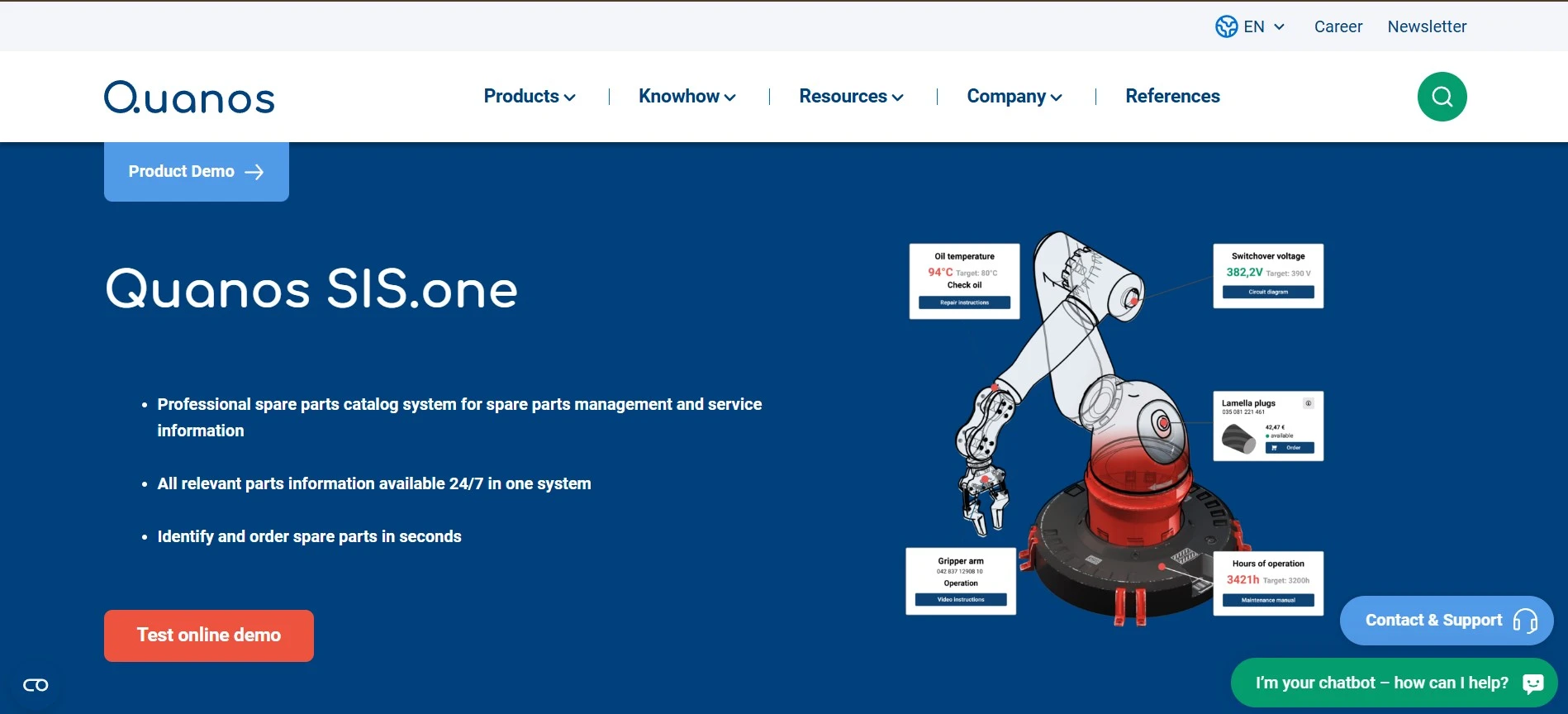
Authoring in Quanos standardizes service information by linking step-by-step repair manuals directly to the required spare parts list. An engineer reading a maintenance procedure for a hydraulic pump views the exact torque specifications alongside a clickable link to order the replacement seals required for the job.
ERP integration is robust, particularly with SAP, reflecting the dominant enterprise software architecture in the European manufacturing market. The system pulls customer-specific discounts and regional availability logic directly into the ordering portal.
Offline capabilities exist through specific synchronization modules that allow technicians to cache required manuals locally before heading out to a job site. This caching requires deliberate pre-planning from the technician, unlike a fully distributed offline application that houses the entire catalog natively. Audit your field team's workflow to determine if pre-caching specific machine manuals will disrupt their dispatch times.
4. Components Engine: Best for Translating CAD to Web
Components Engine focuses specifically on 3D visualization and computer-aided design (CAD) translation. Mid-market equipment manufacturers deploy this platform to reuse their existing engineering models without maintaining separate 2D drawing archives.
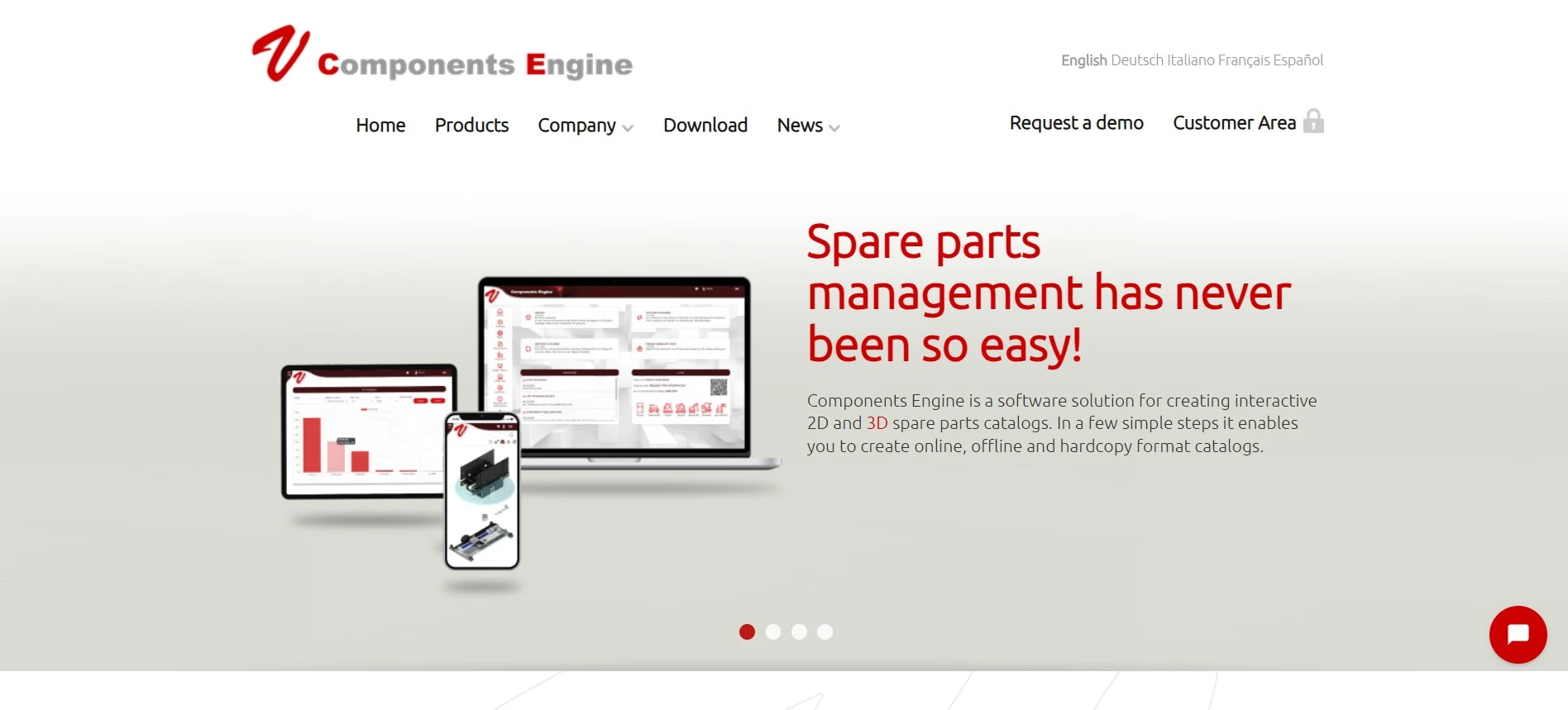
The primary authoring feature is a direct conversion engine. You upload raw CAD files into the system, which strips out the proprietary engineering data and exports a lightweight, secure 3D web viewer. Buyers rotate, zoom, and explode the 3D model directly in their browser to click on individual components and view part numbers.
Connecting this visual frontend to backend systems happens through established database connectors. The platform links the exploded CAD views to standard inventory tables, allowing buyers to add parts to a shopping list based on the 3D interaction.
Field accessibility relies on basic offline viewers. While the 3D models provide excellent clarity for complex assemblies, large machine files become cumbersome to load on mobile devices with limited processing power. Consider your equipment's complexity when comparing Components Engine and EzParts, as highly complex 3D rendering demands optimized software to run smoothly on rugged tablets in the field. Test your largest assembly file on a standard mobile device to verify acceptable load times.
5. GenAlpha (Equip360): Best for B2B E-commerce Portals
GenAlpha built the Equip360 platform as a B2B e-commerce suite specifically for equipment manufacturers. The software operates as a full shopping portal that incorporates parts diagrams alongside whole goods sales and general merchandise.
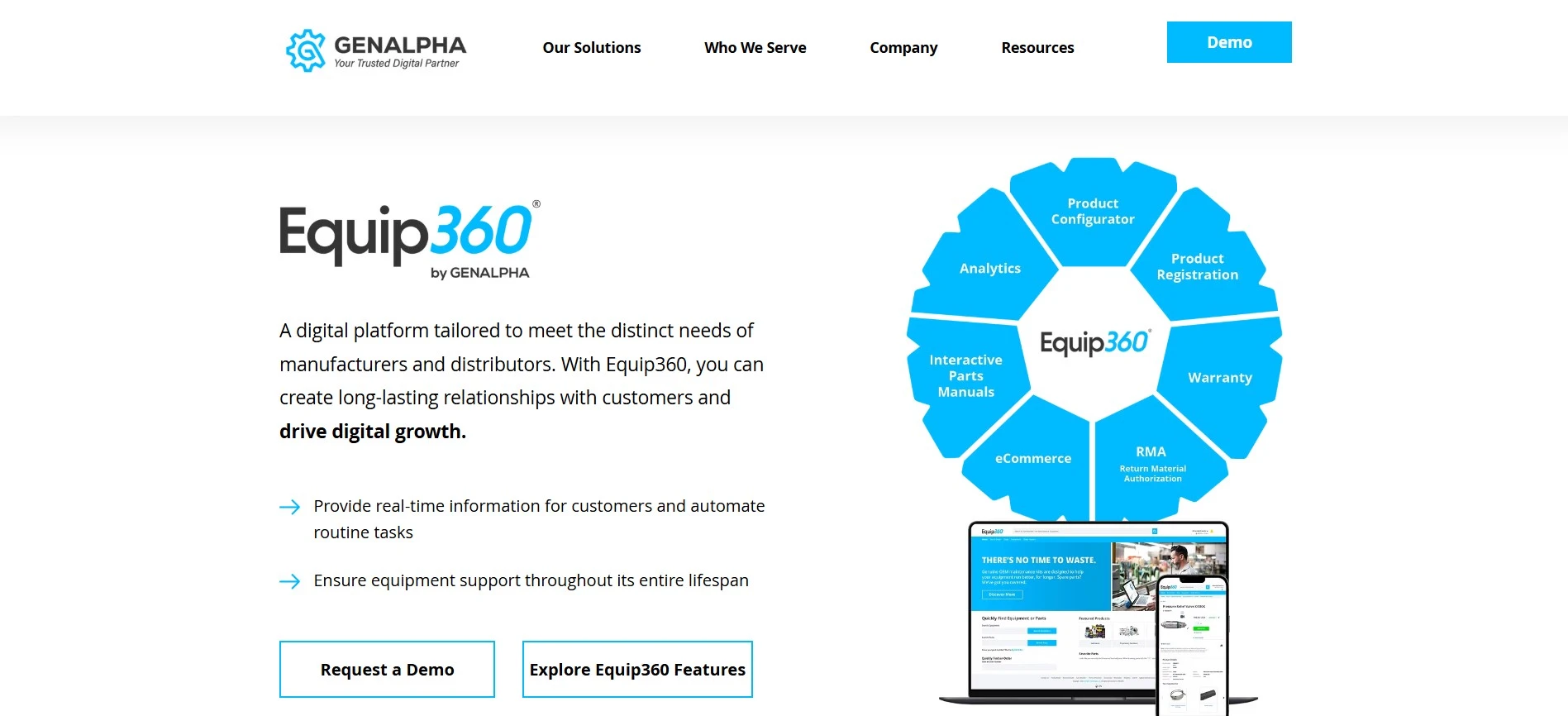
Visual authoring takes a backseat to e-commerce functionality. The platform supports interactive diagrams, but its strongest features center on managing complex B2B buyer journeys. Buyers browse a familiar digital storefront complete with advanced search bars, faceted filtering, and personalized account dashboards.
Integration depth is a core strength for Equip360. The platform connects natively with ERPs to manage complex account hierarchies, differing tax jurisdictions, and highly specific customer pricing tiers.
Because Equip360 operates as a cloud-hosted e-commerce application, offline accessibility does not exist. Buyers must have an active internet connection to browse the catalog, view pricing, and submit orders. Deploy this system primarily for procurement officers, desk-based dealer representatives, and maintenance planners operating within corporate networks. Review your current sales distribution to see what percentage of orders originate from mobile field devices before selecting a purely web-based portal.
EPC Platform Comparison Breakdown
Use this matrix to evaluate how the leading software options handle the technical requirements of a modern manufacturing catalog.
| EPC Platform | Target User | Visual Authoring Focus | ERP Integration Depth | True Offline Capabilities |
|---|---|---|---|---|
| Systems Online (EzParts) | OEMs, Dealers, Field Techs | Multi-shape precise hotspots (2D/3D) | Native, two-way sync with major ERPs | Full native distributed media (USB, DVD, mobile app) |
| Documoto | Office-based Dealers | Cloud PDF text recognition | Standard API inventory checks | Cloud-dependent, requires web connection |
| Quanos (SIS) | European Heavy Machinery | Integrated service manual workflows | Robust SAP integration | Caching-based offline manual downloads |
| Components Engine | Mid-market Manufacturers | Direct CAD-to-web 3D conversion | Standard database connectors | Basic offline viewers |
| GenAlpha (Equip360) | B2B Procurement Officers | E-commerce storefront layouts | Advanced pricing and account logic | Web-based only, no offline support |
Key Features to Require in Your Next Platform
Selecting catalog software dictates how efficiently your aftermarket network operates for the next decade. Evaluate past simple PDF viewing and mandate these three technical capabilities in any system you deploy.
Serial Number-Specific Filtering
General model searches force users to sift through irrelevant options, which increases the likelihood of ordering an incompatible component. Because a machine built in February might feature a different hydraulic pump than the same model built in October, your platform must support serial number-specific filtering.
The software database must relate a specific vehicle identification number (VIN) or asset chassis number directly to its unique as-built Bill of Materials. When a user inputs their serial number, the catalog prunes the visual interface to hide any optional attachments or revised components not physically installed on that exact unit. E-commerce portals utilizing exact serial fitment experience higher conversion rates because buyers gain absolute confidence that the part will fit.
Automated Kit Components and Supersessions
Tribal knowledge causes ordering errors because an experienced mechanic knows that replacing a specific bearing requires ordering three specific crush washers and a new seal, while a new technician will only order the bearing. This mistake leaves the machine disassembled on the shop floor waiting for a second shipment of supporting hardware. Your platform must handle automated kit component displays to present the required complementary hardware as a packaged kit when a user selects a primary part.
The software must also manage supersessions automatically without creating logic loops in your database. Manufacturers redesign parts constantly, so when Part A is deprecated and replaced by Part B, the catalog must map that change immediately. A dealer searching for the old part number must automatically land on the new component's page, complete with a clear notification of the replacement. If Part B is later replaced by Part C, the system must resolve the chain so that a search for Part A routes directly to Part C.
'Shift-Left' Data Maintenance
Maintaining a digital catalog manually requires dedicated teams to format spreadsheets and redraw diagrams every time engineering issues a revision, which delays time-to-market for replacement parts and introduces human error. Implement "shift-left" data maintenance by integrating the parts catalog directly with your engineering and CAD databases.
When a mechanical engineer updates a SolidWorks assembly and pushes the revision to the central ERP, the change must ripple outward automatically. The catalog software should detect the revised BOM, update the visual hotspots, and publish the new supersession data to the cloud, mobile applications, and offline media packages without manual intervention from technical writers. This automated data pipeline establishes a single source of truth that synchronizes your entire aftermarket network.
Systems Online builds multi-channel electronic parts catalogs that eliminate ordering errors and drive aftermarket revenue. Transition your static manuals into an interactive, ERP-integrated platform that works anywhere your technicians do. Contact Systems Online to schedule a custom demonstration of EzParts using your exact equipment data.
Modified on: 08/10/2026