Blog » Top Quanos SIS.one Alternatives for 2026
Top Quanos SIS.one Alternatives for 2026

Unplanned equipment downtime drains revenue fast, costing large manufacturing operations an average of $260,000 per hour. This metric varies by industry, and automotive assembly plants see that number spike over $2.3 million per hour. When a heavy asset fails, your field service technicians need accurate parts information immediately because every minute spent clicking through outdated PDF manuals or cross-referencing incompatible components delays the repair.
Many organizations rely on Quanos SIS.one, a platform born from the consolidation of two older German legacy systems, PARTS-PUBLISHER and CATALOGcreator. While this merger centralized technical documentation for some users, legacy on-premise roots often struggle to meet the demands of modern B2B eCommerce. Original equipment manufacturers (OEMs) require modern Quanos SIS.one alternatives to transform static documentation into revenue-generating aftermarket portals. Systems Online meets this need by eliminating aftermarket ordering errors and boosting parts sales through multi-channel, interactive electronic parts catalogs that integrate directly with existing ERPs.
You need an electronic parts catalog (EPC) that acts as a multi-channel eCommerce hub. Systems Online's EzParts platform leads this transition by offering deep ERP integration, offline field access, and an interactive purchasing environment. Evaluating the market requires comparing options against consistent criteria, including deployment flexibility, core differentiators, ERP synchronization, and ideal target users.
EPC Platform Comparison for 2026
| Platform | Deployment Model | Core Differentiator | ERP Sync Depth | Target User |
|---|---|---|---|---|
| Systems Online (EzParts) | Cloud, On-Prem, Offline Media | True disconnected offline access | Deep (Live inventory, pricing, automated orders) | OEMs & Field Service Techs |
| Intellinet Systems | Cloud | B2B aftermarket portal tools | Moderate (Pricing and stock via API) | Brands focused on parts sales |
| Documoto | Cloud SaaS | Transitioning legacy PDFs to web | Moderate (Standard integrations) | Mid-market manufacturers |
| Partful | Cloud SaaS | Native 3D CAD processing | Light (Focus on visual navigation) | Design-heavy engineering teams |
| Components Engine | Cloud & Desktop | Custom dealer dashboards | Moderate (Order export) | Dealer networks |
| Cadshare | Cloud SaaS | Engineering-to-sales data links | Moderate (Stock queries) | Heavy machinery manufacturers |
| GenAlpha | Cloud SaaS | Integrated B2B storefronts | Moderate (Cart checkout links) | Construction and mining OEMs |

1. Systems Online (EzParts): Best Overall for Offline Use & ERP Sync
When heavy equipment breaks down in remote mining sites or deep in agricultural fields, technicians rarely have cell service. Web-dependent catalogs fail in these environments, which forces workers to rely on outdated paper manuals.
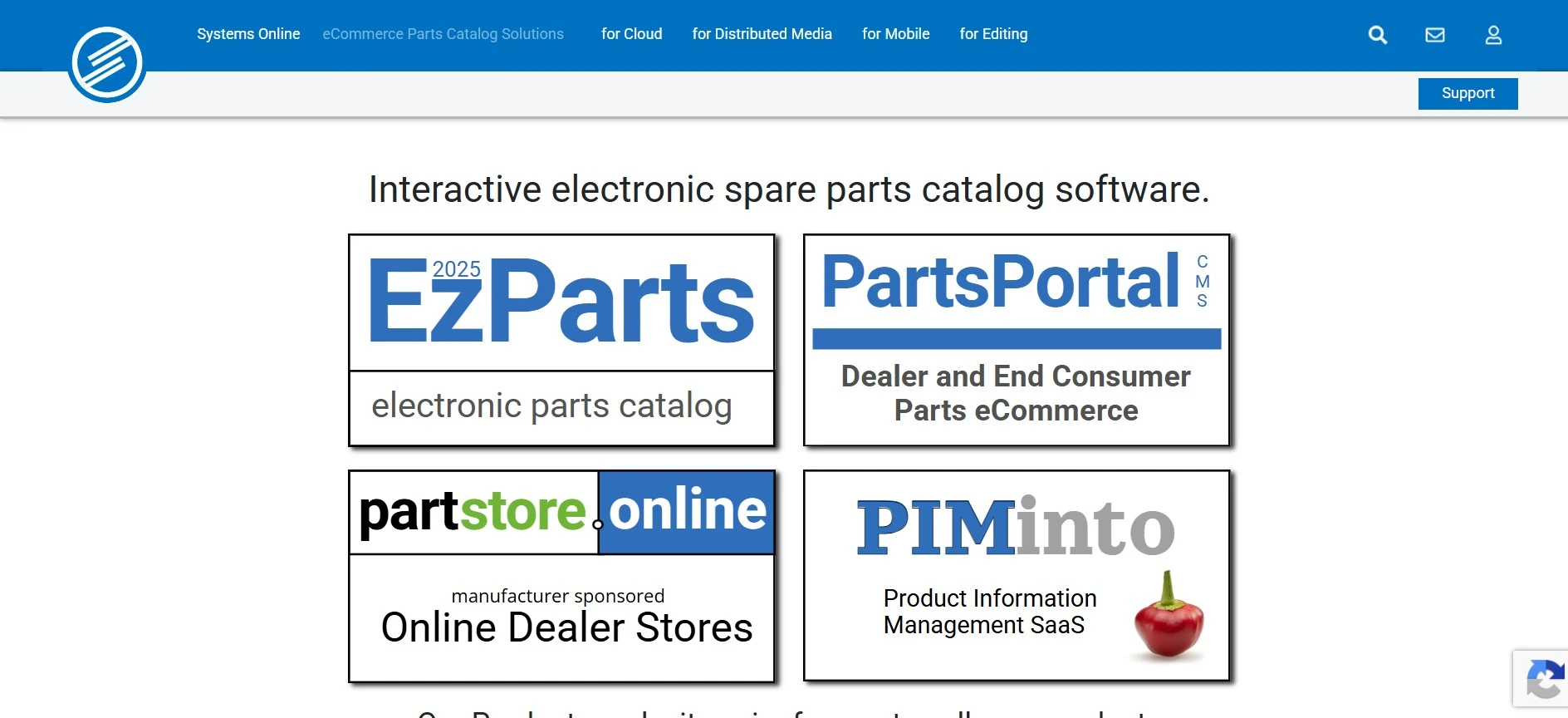
Systems Online solves this hardware connectivity gap by delivering multi-channel distribution, offering offline distributed media alongside cloud and on-premise versions. Technicians load the EzParts software onto a toughbook or mobile device to carry interactive schematics into disconnected zones. Returning to a Wi-Fi connection triggers a delta update, where the system downloads only the specific files and inventory data that changed since the last sync to keep the process fast and minimize bandwidth usage.
Beyond offline access, electronic parts catalog software must eliminate ordering errors through serial-specific filtering, known in EzParts as effectivity. When a user enters a machine's exact serial number or VIN, the catalog hides any parts or configurations that were not installed on that specific unit at the factory. Technicians stop ordering incompatible replacement parts because the software removes those options from the screen.
Connect EzParts to your enterprise resource planning (ERP) system to handle stock and pricing. Live inventory availability prevents users from ordering backordered parts during an emergency. The system queries your ERP, whether SAP, Oracle, Epicor, or Dynamics, and displays current stock levels on the schematic interface. Clicking a component prompts the software to suggest the matching gasket kit or mandatory replacement hardware required for the repair. Every part lookup converts into a cart addition, allowing native integration to automate order insertion into your accounting software.
Bring Systems Online into the middle of this workflow to connect the change you are making with the outcome you care about. The work is easier to justify when you can see the result after you ship it.
2. Intellinet Systems: Strong Contender for Aftermarket Growth
The global aftermarket parts industry continues to expand. Capturing that revenue requires giving buyers what they expect, because B2B buyers operate like retail consumers and prefer digital platforms for immediate pricing and inventory answers.
Intellinet Systems offers a strong platform for brands focused on aftermarket sales expansion. Their architecture emphasizes the B2B storefront experience to make navigating large catalogs easier for distributors and end-users.
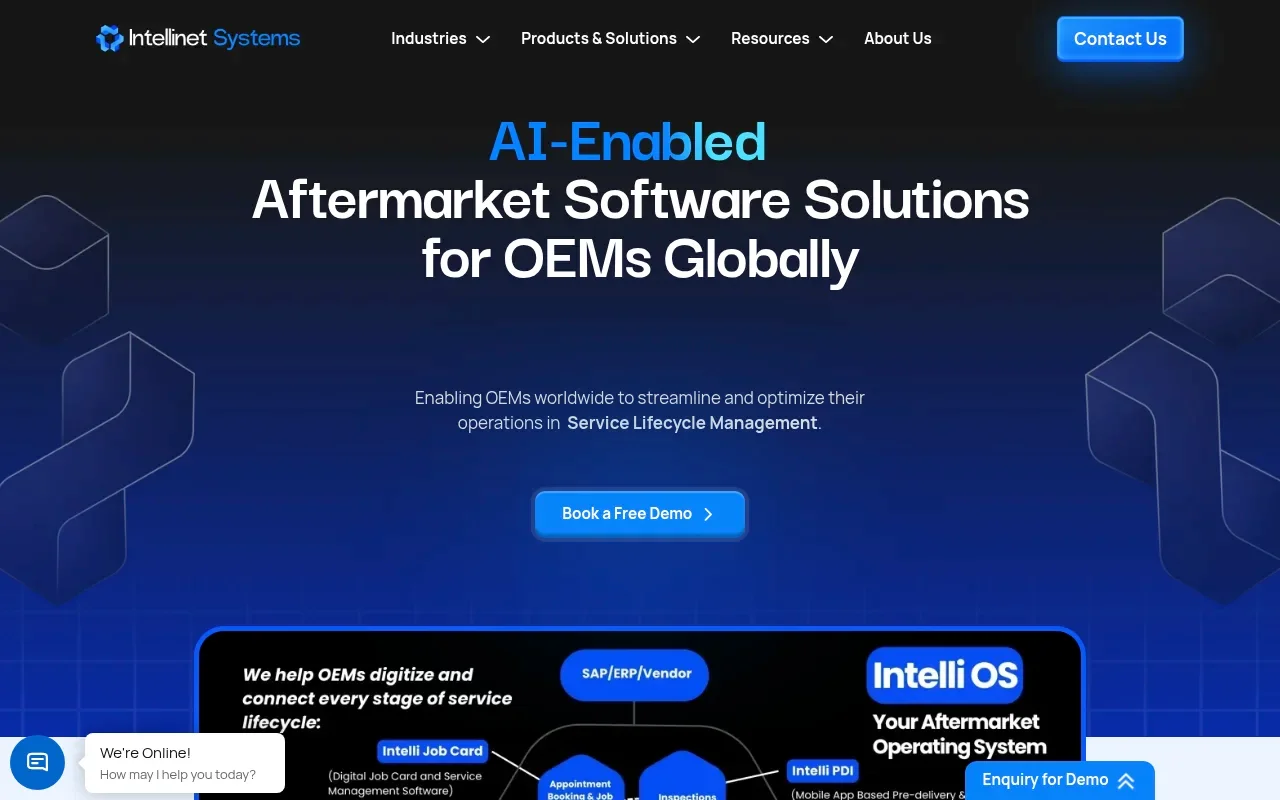
Configure your Intellinet portal to handle complex customer-specific pricing tiers. Dealers operate under different discount structures, meaning a generic list price frustrates buyers. The software queries the connected database to identify the logged-in user's specific dealer tier, applying the correct discount logic before rendering the price on the screen.
Intellinet provides visual navigation tools that let users click through high-level assembly drawings down to granular sub-assemblies. Tie this visual navigation to your quoting engine. Dealers should not be forced to copy part numbers into separate emails, so you should configure the cart to generate formal PDF quotes that the dealer can forward to their end customer for approval.
3. Documoto: Transitioning Legacy Manuals to Cloud SaaS
Historically, electronic parts catalogs lived on local servers maintained by in-house IT departments, which required constant hardware maintenance, security patching, and manual database backups.
Documoto focuses on cloud-native SaaS deployment. Moving your catalog to a hosted environment reduces hardware overhead and offloads support tickets. Technical writers log into a web browser to author and update content, pushing changes live to the dealer network. If you evaluate Documoto alternatives, test the platform's authoring environment to ensure it meets your updating speed requirements.
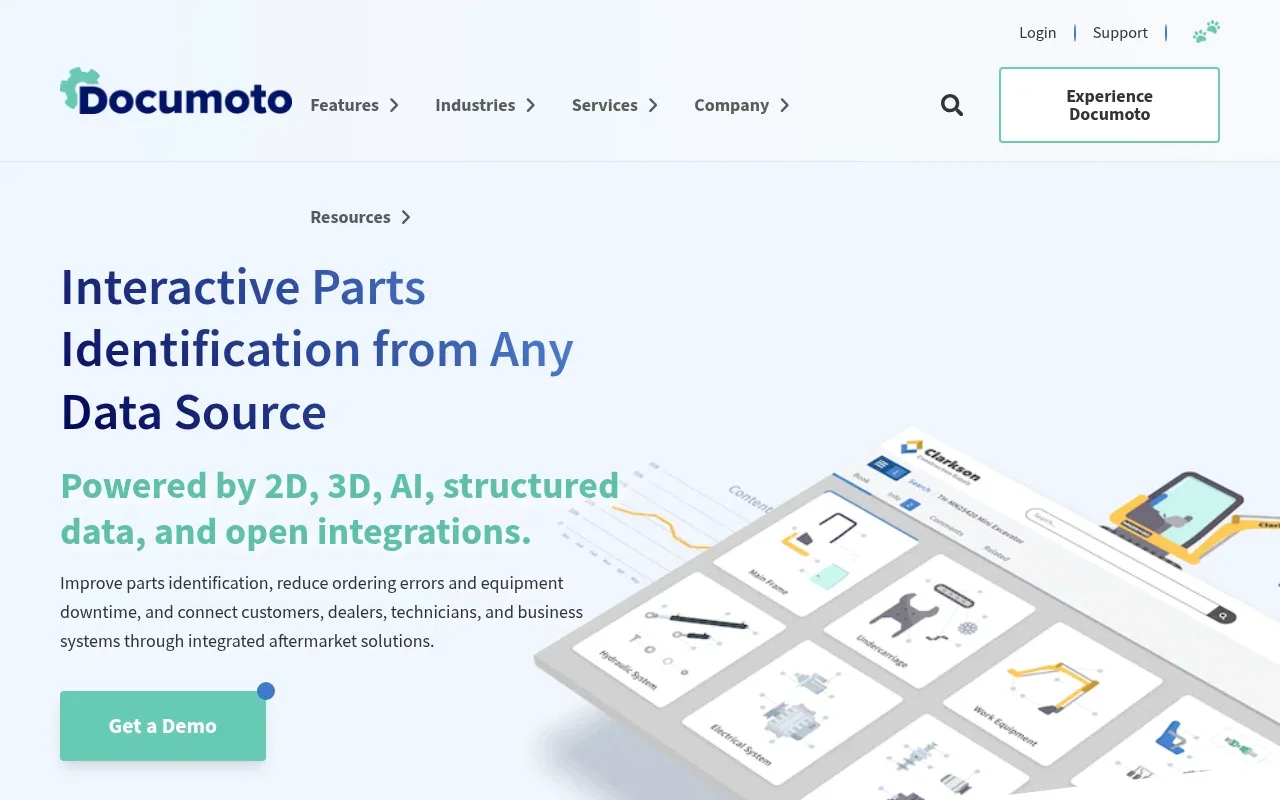
Documoto excels at linking bill of materials (BOM) rows to 2D SVG hotspot coordinates. When importing a legacy PDF, the authoring tool helps you map specific line items to the corresponding numbered callout on the diagram. A dealer looking at the web viewer clicks the number "4" on the drawing, and the system highlights the corresponding row in the parts list. Focus your initial deployment on your highest-volume product lines by converting those static PDFs into interactive SVG files first, then training your dealer network on the new click-to-add functionality.

4. Partful: Processing Native 3D CAD Files Directly
Many older EPC platforms force engineers to export complex 3D models into flat 2D illustrator files before publishing. This extra step introduces delays between a product's release and the availability of its service documentation.
Partful eliminates this manual conversion by processing native CAD formats. The software ingests STEP files and creates interactive 3D exploded views for the web browser, allowing technicians to rotate the model, zoom in on hidden assemblies, and select parts visually.
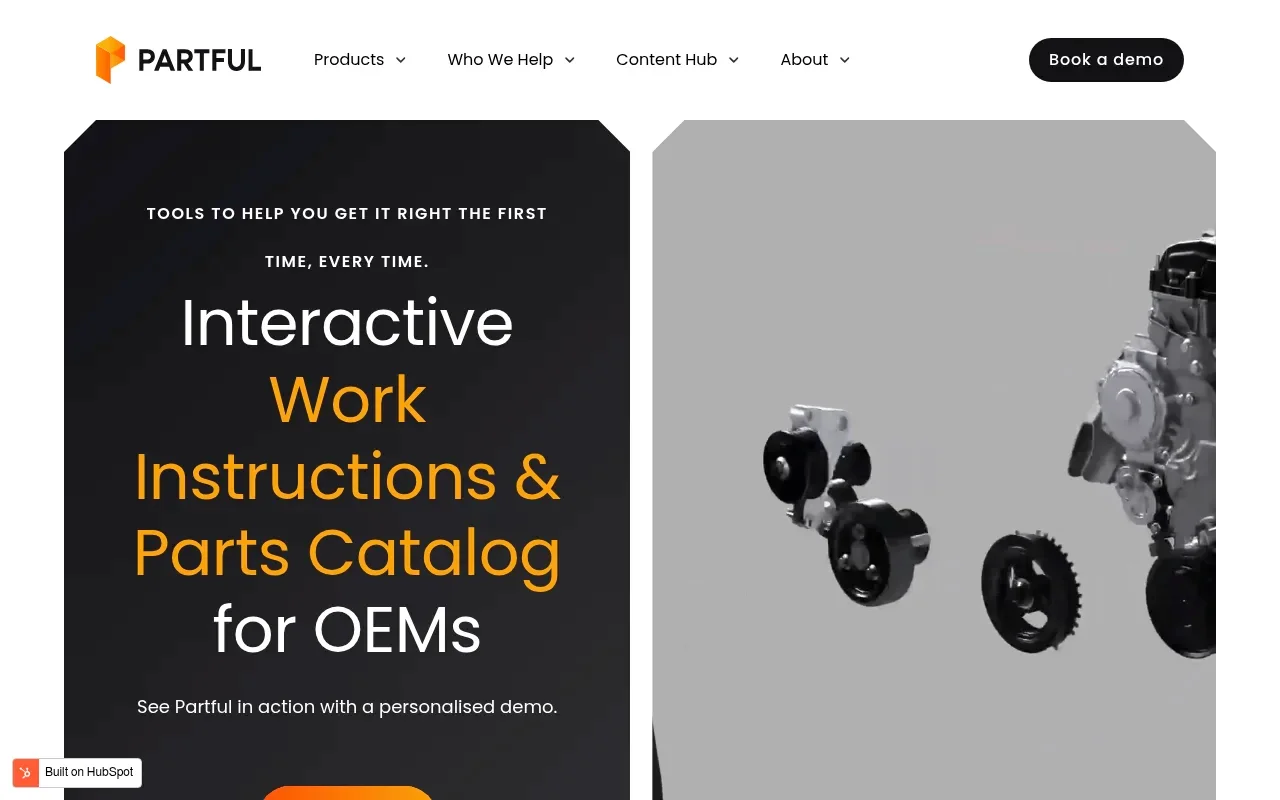
Partful pairs this 3D parsing with AI-driven natural language processing. Field workers rarely use exact engineering terminology when searching for a replacement, often typing colloquial names or regional slang instead. The NLP search engine interprets these imprecise queries and routes the user to the correct technical SKU. Configure the search index to include your historical support tickets and warranty claims to train the engine on the exact phrases your dealers use when they call the support desk.
5. Components Engine: Validating Orders to Protect Dealer Margins
Ordering the wrong part destroys a dealer's profit margin because return shipping costs reduce revenue, restocking fees apply, and the end customer endures another week of equipment downtime. Dealers need a system that prevents incorrect selections.
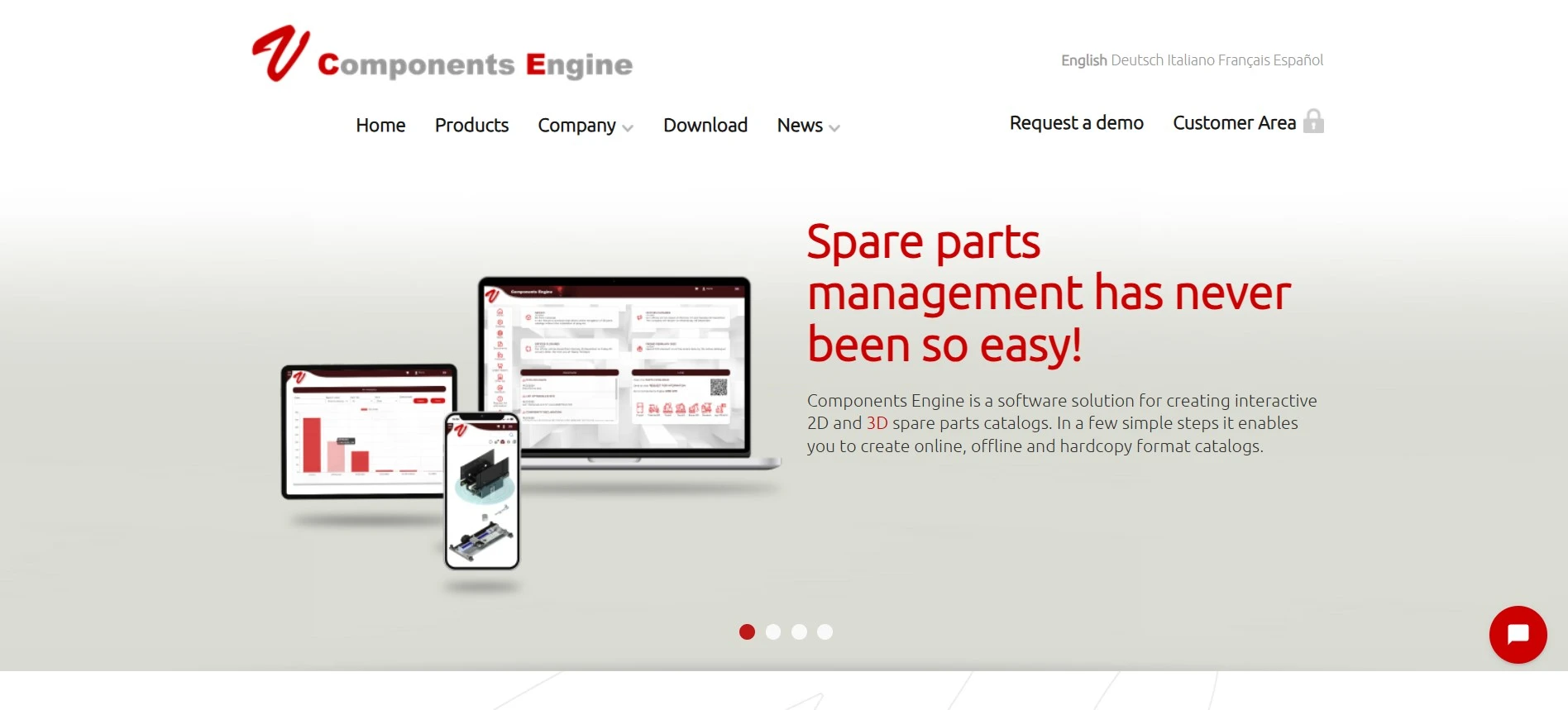
Components Engine provides specialized tools for dealer networks that focus on margin protection through accurate identification. The platform allows OEMs to build customized dealer dashboards displaying warranty history, past orders, and service bulletins alongside the parts manual.
Use Components Engine to enforce strict order validation. Before a dealer submits a cart, the system checks the selected items against the registered equipment profile. If a dealer attempts to order a 24-volt starter for a machine originally built with a 12-volt electrical system, the software flags the mismatch and halts the transaction, catching human error before the warehouse picks and ships the wrong component.
6. Cadshare: Linking Engineering PLM Data to Sales Portals
Engineering departments and aftermarket sales teams often operate in isolated data silos. When engineering updates a part revision in their Product Lifecycle Management (PLM) software, the sales team might continue selling the outdated SKU because the catalog fails to receive the update. Cadshare bridges this gap by creating tighter data links between the engineering source files and the final eCommerce portal.
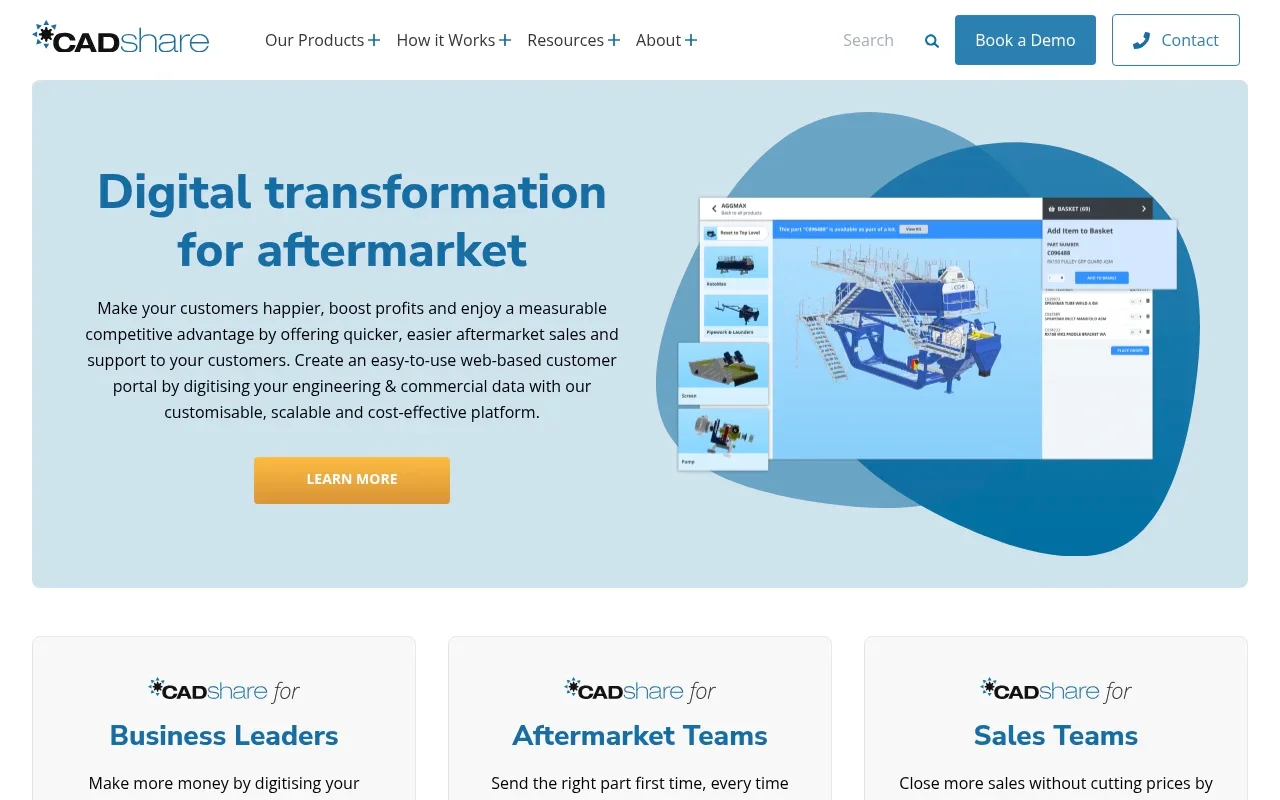
Configure automated data exports from your PLM into Cadshare. When an engineer finalizes a design change, the system automatically generates an updated bill of materials and pushes it to the catalog staging environment, which reduces the technical writing backlog. Instruct your content team to review the staged changes, verify the pricing rules, and publish the update. Linking these departments ensures your sales team always presents the most current engineering revision to the market.
7. GenAlpha: Automating Complex Supersession Chains
Product lifecycles span decades in the heavy machinery industry. During that time, suppliers change, materials improve, and parts undergo multiple engineering revisions, creating complex replacement histories known as supersessions.
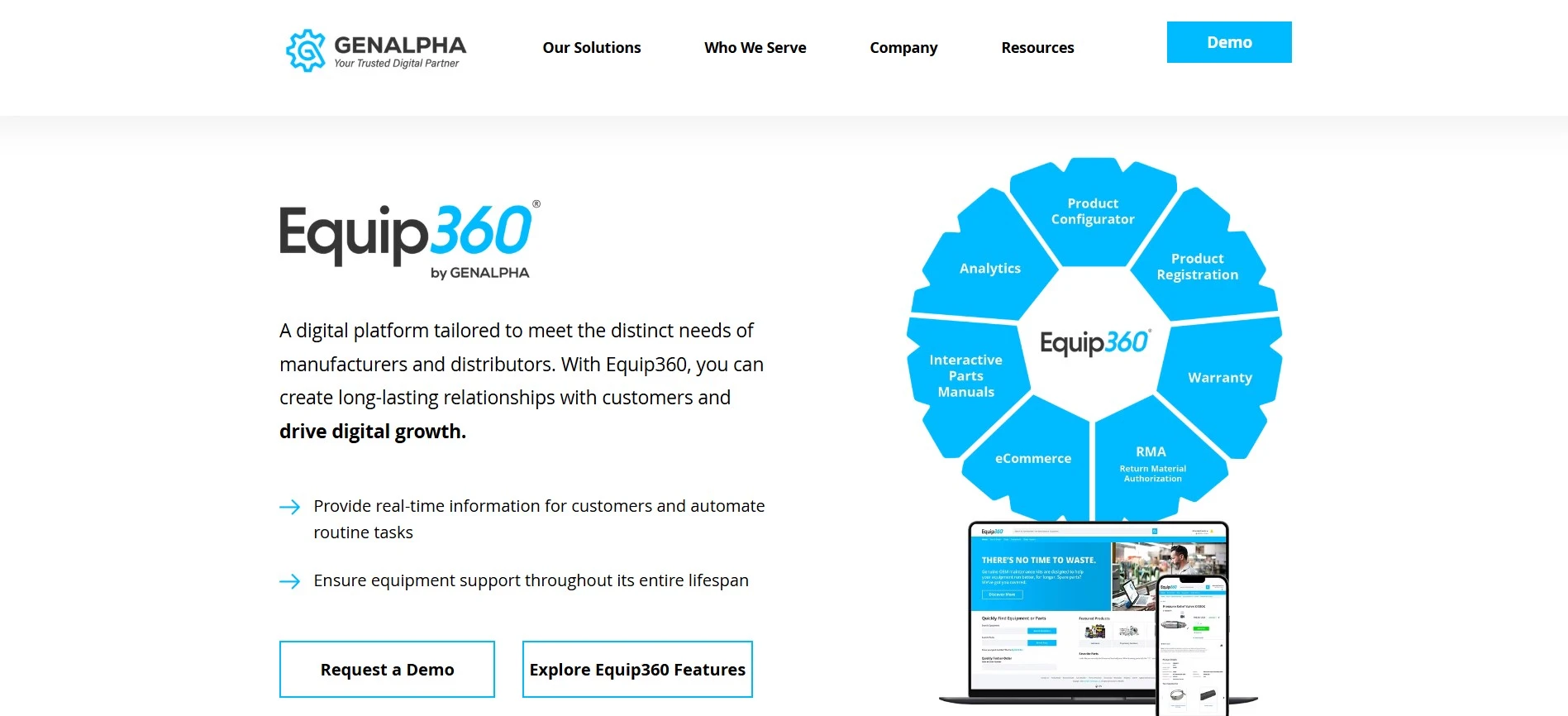
GenAlpha integrates B2B storefront features with supersession management logic to map entire replacement chains, such as when Part A is replaced by Part B, which is later replaced by Part C.
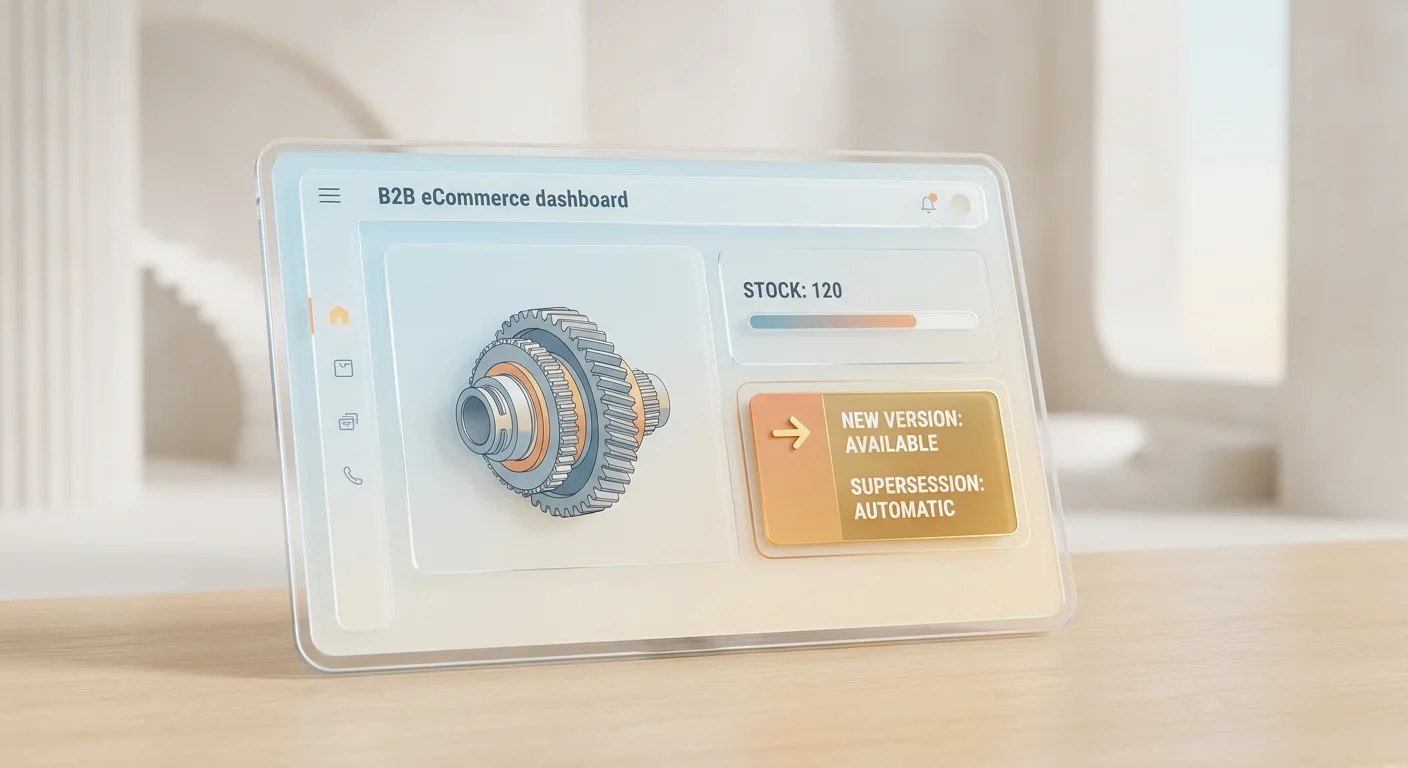
Configure your supersession rules to handle different replacement scenarios. A one-to-one replacement redirects the old part number to the new one, but one-to-many replacements require specific software logic. If a single legacy bracket is replaced by a new bracket plus two distinct mounting bolts, searching for the old SKU must automatically load all three new components into the user's cart. Map these relationships in your ERP, and ensure your catalog software reads that logic to guide the dealer to the current revision without dead-end searches.
Capabilities to Require in Your Next EPC Platform
Choosing an alternative to Quanos SIS.one requires looking past basic web viewing capabilities. The electronic parts catalog benefits that reduce your operational costs come from automation and deep integration, so demand these specific capabilities during your software evaluation. Systems Online prioritizes these features in the EzParts platform to ensure that documentation drives sales rather than archiving data.
Implementing a Single-Source Publishing Strategy
Maintaining separate databases for print manuals, web portals, and offline desktop applications guarantees data conflicts. Updating the web price but failing to update the offline export leads to billing disputes with dealers.
Adopt a single-source publishing strategy where your EPC acts as the master record. When you update a component's price or swap out a diagram, the software syncs the web portal, packages the delta update for offline mobile users, and dynamically generates an updated branded PDF parts book for legacy print requests. Centralizing your updates cuts your technical writing workload and ensures every channel displays identical data.
API Integration with Field Service Management (FSM)
Technicians lose time switching between their work order app and a separate parts catalog, requiring modern EPCs to connect to Field Service Management (FSM) software via API.
Configure your FSM platform to launch the catalog from the digital service report. Pass the machine's serial number through the API payload so that when the technician taps the catalog button in their work order, the EPC opens filtered to that machine's configuration. They select the required components, and the catalog passes the part numbers and quantities back to the FSM app to attach them to the invoice. This connected workflow reduces manual data entry and accelerates the repair cycle.
Systems Online provides interactive electronic parts catalog software designed for whole goods and equipment manufacturers. With deployment options spanning cloud-hosted SaaS, on-premise enterprise, and disconnected offline media, EzParts ensures your dealer network and field technicians always have access to accurate, serial-filtered parts data. Stop losing revenue to ordering errors and outdated manuals. Visit Systems Online to see how EzParts integrates with your ERP to turn your technical documentation into a high-performing aftermarket portal.
Modified on: 08/10/2026