Blog » Circular Manufacturing: Keeping Equipment Parts in Use
Circular Manufacturing: Keeping Equipment Parts in Use
A failed component on long-lived equipment forces an immediate choice. When a hydraulic pump or drive motor stops working, the machine sits idle, leaving a technician to decide how to restore function. They can repair the existing unit on-site, replace it with an approved new part, install a factory-remanufactured option, or retire the larger assembly entirely. Every hour of equipment downtime incurs substantial costs for operators in agriculture, construction, mining, and industrial manufacturing, which creates intense pressure to choose the fastest possible remedy. In many traditional service environments, that pressure defaults to swapping out entire modules or discarding repairable hardware because identifying and sourcing sub-components takes too much effort.
Each of these decisions determines the lifecycle of that component. Building a circular economy in manufacturing parts prioritizes keeping these components in functional use for as long as possible. Recovering raw materials through recycling happens only when a part can no longer do the job it was engineered to perform. When an OEM establishes a structured parts recovery and reuse program, it extends the service life of capital equipment, preserves the embodied energy of manufactured components, and provides customers with cost-effective maintenance options. Making this system work requires more than a repair facility, because dealers and technicians need a reliable digital information layer to execute these choices accurately. Systems Online develops EzParts, an electronic parts catalog that provides this layer to help service personnel identify, verify, and order the correct replacement, refurbished, or remanufactured parts directly from the field.
Define Circularity Beyond Recycling
The Ellen MacArthur Foundation introduces circular-economy principles and describes how businesses are shifting from linear models to circular systems that design out waste.
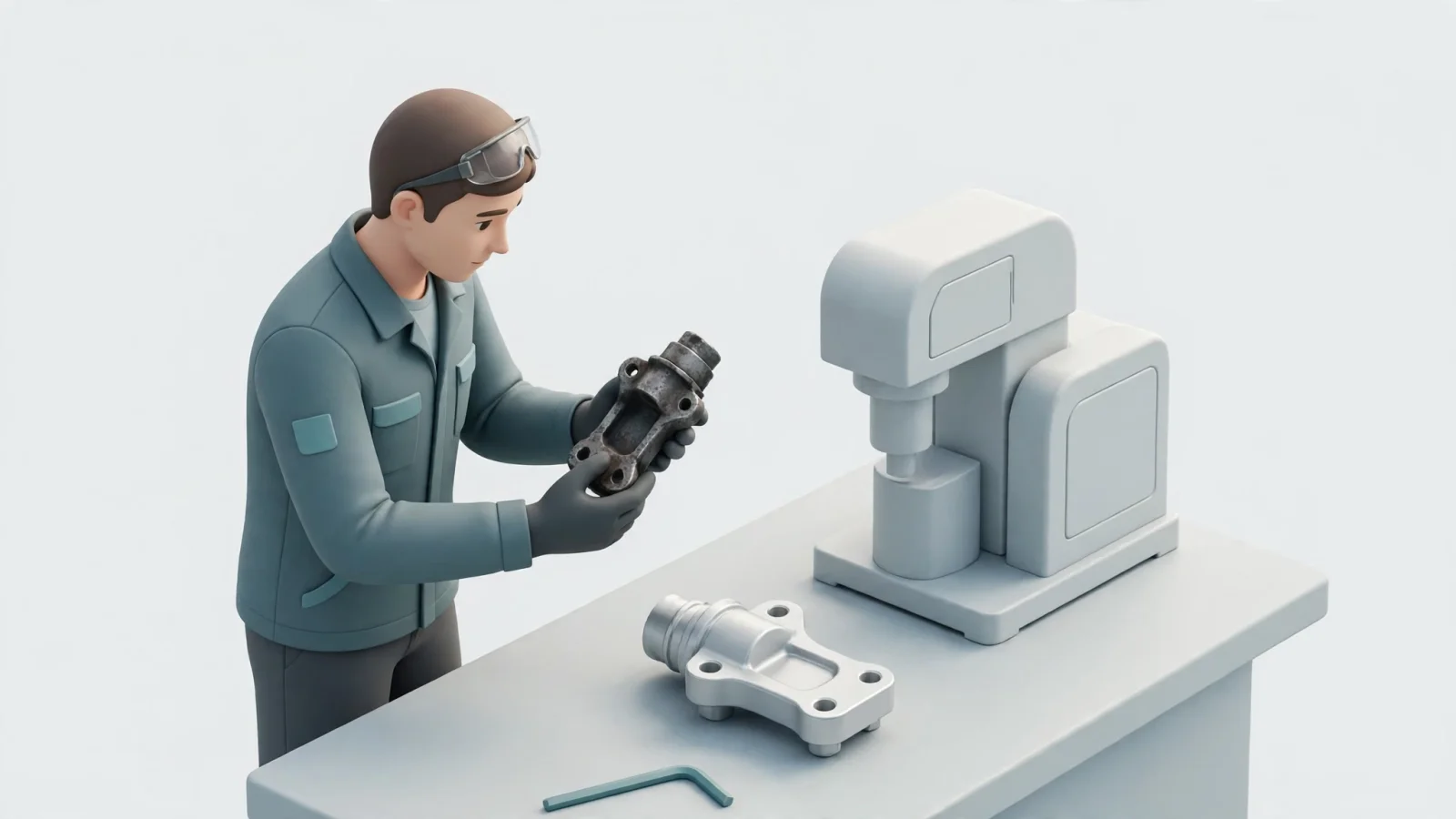
A 2023 report by the U.S. Department of Energy organizes these life-extension strategies into a "Re-X" framework. This model distinguishes the different routes a component can take based on its condition and the manufacturer's capabilities. Treating all circular strategies as general recycling obscures the specific processes required to keep equipment running. Each route in the framework represents a distinct level of technical intervention, requiring different tooling, diagnostic capabilities, labor skills, and supply chain logistics.
| Recovery Route | Physical Definition | Service Context |
|---|---|---|
| Repair | Returning a defective product to its original functional state. | Fixing a broken seal or replacing a single shattered housing on-site to get the machine back to work immediately. This process addresses specific localized faults while leaving the rest of the existing assembly in service. |
| Refurbishment | Restoring and updating an older product. | Taking a heavily used assembly, cleaning it, replacing wear items, and potentially applying updated protective coatings. This process often includes cosmetic refreshing and minor functional updates to bring an asset to an acceptable operational standard. |
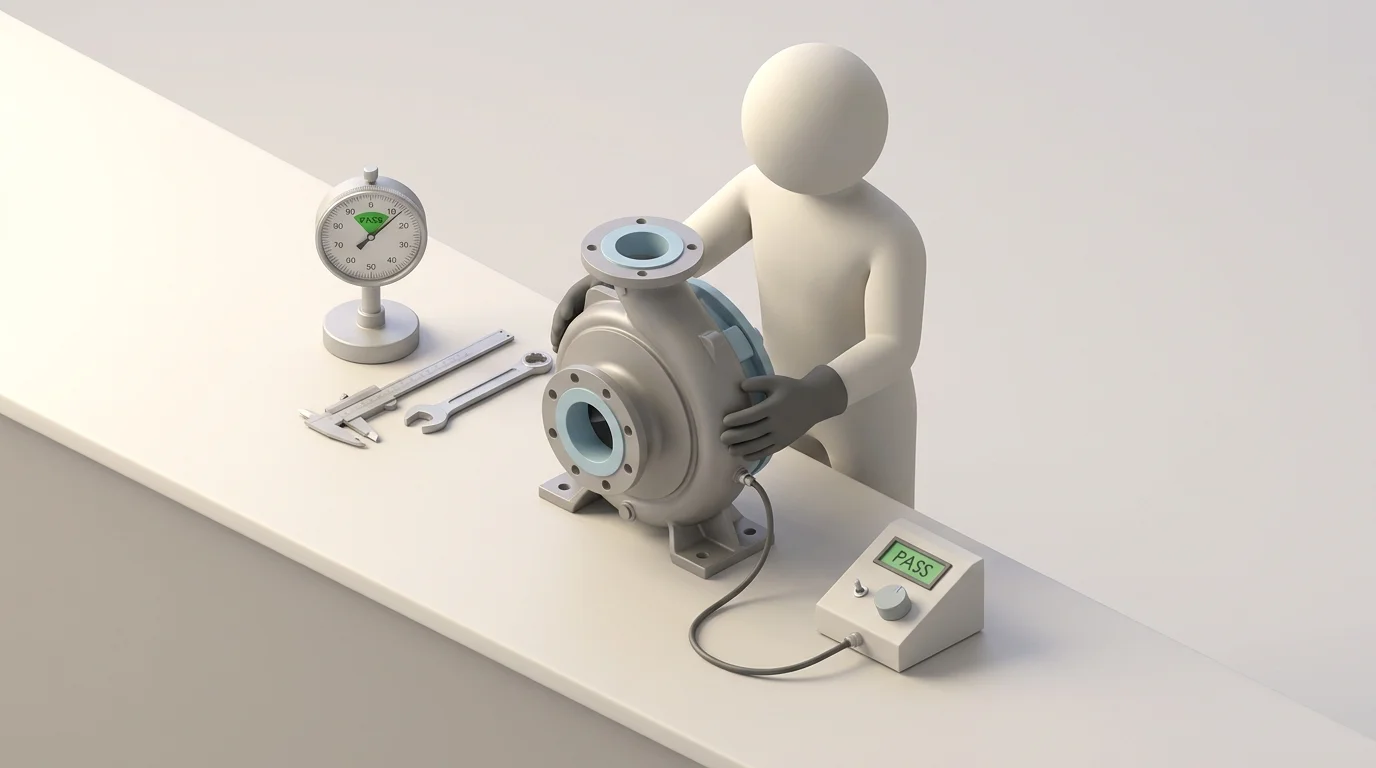
| Remanufacturing | Using parts from discarded products in a product with the same function. | Returning a core to a factory setting where it is disassembled, machined, rebuilt with new internals, and tested to original specifications. The resulting component meets factory tolerances and performance criteria. |
| Recycling | Processing material into a commodity. | Melting down an unrecoverable, cracked engine block to cast entirely new metal components. This step occurs only when mechanical failure or structural fatigue makes functional restoration impossible. |
Separating these routes allows original equipment manufacturers (OEMs) to build specific operational programs for each. A technician might perform a repair in a dirt lot, whereas remanufacturing requires a controlled facility. Refurbishment can happen at an authorized regional dealer workshop equipped with specialized cleaning tanks and basic testing benches. Recognizing where each process fits along the value chain prevents companies from misallocating resources or applying industrial processes to simple maintenance problems.
Match the Recovery Route to the Part
Deciding which route a part takes depends on its physical condition, approved fitment requirements, and the OEM’s established service process. No universal sequence forces every part through repair, then refurbishment, and finally remanufacturing. Complex mechanical equipment consists of thousands of individual components, ranging from consumable rubber gaskets to heavy cast-iron transmission housings. Applying an identical lifecycle model to every component creates logistical bottlenecks and drives up service overhead.
Keeping equipment working through active maintenance and localized repair provides the most efficient path. When a component sustains heavy wear but retains structural integrity, reuse and remanufacturing become viable options that require rigorous control. According to the DOE report, prime candidates for remanufacturing include parts that can be re-machined or restored by replacing specific worn sub-components to recover original performance standards and geometric tolerances. Heavy engine blocks, hydraulic pumps, turbochargers, and electrical starters frequently fit this description because their durable external casings survive multiple cycles of internal component wear.
A NIST remanufacturing model lists inspection, part replacement, refurbishment, reassembly, and testing among the activities involved in remanufacturing.
Many manufacturers operate dedicated return loops to feed this process. Hitachi Construction Machinery Americas uses strict used-part return protocols as the initial step in its remanufacturing cycle. After undergoing factory rebuilding and testing, these returned components meet original performance specifications and carry a standard parts warranty. The chosen recovery route always matches the engineering reality of the part. If a component exhibits structural cracking that welding cannot safely resolve, functional use is no longer practical, making recycling the correct decision. By evaluating parts against clear mechanical criteria, OEMs prevent defective cores from entering remanufacturing channels while avoiding the premature disposal of salvageable components.
Design for Access, Repair, and Recovery
Circularity starts on the engineering table rather than at the end of a product's life. If a field technician cannot reach a failed bearing without cutting through a welded enclosure, that equipment design actively prevents repair. Engineers often face trade-offs between assembly speed on the factory floor and service accessibility in the aftermarket. Welding a bracket directly to a frame might reduce manufacturing seconds during initial assembly, but it can force hours of destructive labor during a routine field replacement.
Practical disassembly and replacement determine how well a product life-extension program works. A publication by the European Commission Joint Research Centre demonstrates that repair, reuse, and component harvesting require facilitated access to product components. Reducing the time and cost associated with disassembly improves the economic feasibility of circular strategies. When manufacturers use threaded fasteners instead of permanent adhesives, route electrical harnesses away from common access panels, and modularize high-wear components, they lower the barrier to entry for aftermarket service. Modular engineering allows technicians to isolate a malfunctioning hydraulic manifold or planetary hub, unbolt it with standard tools, and install a replacement unit without dismantling surrounding subsystems.
Physical design choices connect directly to the information provided to the service network. A modular sub-assembly saves time only if the technician knows it can be removed as one unit, which requires clear schematics, accurate bills of materials, and current fitment data. Service documentation needs to map exactly to the physical hardware. If the engineering department updates a casting to improve serviceability in 2026, the corresponding drawings and replacement part numbers reflect that change for the specific serial numbers affected. Disconnecting physical design from service information forces technicians to guess, leading to broken components and unnecessary scrap.
When service documentation fails to reflect engineering revisions, technicians often order incorrect assemblies, attempt improper disassembly sequences, or discard salvageable sub-components because they are unsure whether they can be reused. Clear service literature must define wear limits, torque specifications, and approved core disassembly steps. Linking this documentation directly to the parts catalog gives the service technician the context required to disassemble an asset cleanly, harvest reusable cores without damaging adjacent parts, and complete repairs according to OEM standards.
Make Circular Options Findable in Service
A robust remanufacturing program delivers limited value if the dealer network cannot find the approved parts. When a technician looks up a replacement component, the system needs to present all valid options, including new, refurbished, and remanufactured alternatives. If a remanufactured alternator sits in a regional distribution center but remains invisible during a standard part number search, counter staff will simply order a new unit. Visibility at the exact point of lookup drives adoption across the dealer network.
An electronic parts catalog software platform transforms static part lists into interactive, searchable environments. Systems Online’s EzParts helps you operate complex equipment lifecycle management software ecosystems by linking 2D and 3D schematics directly to business logic. When a user selects a hotspot on a drawing, the catalog displays the associated part number, description, and applicable kits. If a remanufactured version of that starter motor exists, the catalog displays it alongside the new option, allowing the technician to verify the price, check warehouse availability, and place the order through an integrated eCommerce cart in one continuous workflow.
Presenting these options clearly helps dealers communicate the trade-offs to end customers. A customer operating an older machine with an expected remaining service life of two years might reject an expensive brand-new drive motor, choosing instead to decommission the asset. When the dealer can immediately quote an OEM-approved remanufactured motor backed by factory testing and warranty coverage, the repair becomes economically viable for the machine owner. The parts catalog acts as the decision support engine that makes these alternatives visible and actionable.
Tracking supersessions remains a primary function for long-lived equipment. As manufacturers redesign parts to improve durability or consolidate inventory, old part numbers retire, and the catalog automatically directs searches for discontinued parts to their active replacements. Without accurate supersession chains, a dealer might assume a part is unavailable, leading them to scrap a machine that could have been saved with an updated component. Complex machinery can remain in active operation for twenty or thirty years, accumulating dozens of engineering changes over its lifecycle. An electronic catalog tracks these backward-compatible relationships, cross-referencing serial numbers and build dates to ensure that updated components fit older chassis without unexpected modifications.
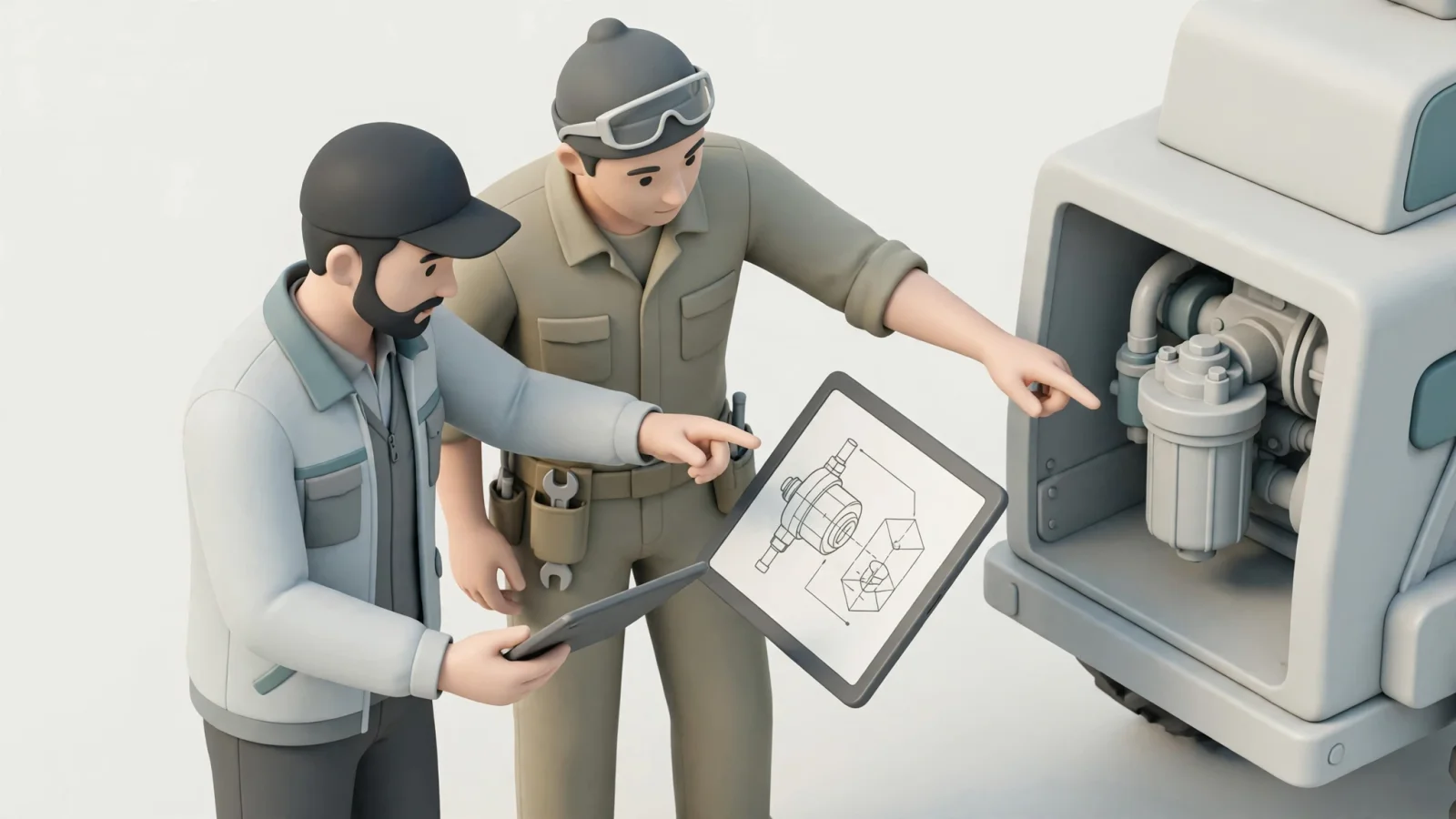
Field technicians rarely work in perfectly connected environments. Agricultural machinery breaks down in remote fields, and industrial equipment often operates in deep mechanical rooms lacking cellular service. To keep parts information available in the field, a mobile electronic parts catalog software application allows users to store schematics, service bulletins, and catalog data directly on their devices. They can identify the correct replacement part, build an order cart while disconnected, and sync the transaction the moment they regain a network connection. This local access prevents service delays and eliminates the need to rely on printed binders that quickly fall out of date.
Build and Measure a Parts Circularity Program
Deploying a circular parts strategy requires distinct, manageable phases. Attempting to launch a global remanufacturing program across every product line simultaneously typically causes logistics failures and frustrated dealers. Manufacturers must build operational discipline step by step, testing their reverse logistics, core evaluation criteria, and dealer communication protocols on a small scale before expanding across the entire product catalog.
Start with a single product family or a specific high-wear component group where the service needs are well understood, the fitment data is clean, and the potential recovery routes are mathematically viable. Drivetrain components, rotating electrical assemblies, and hydraulic actuators make strong starting points because they experience predictable wear cycles and contain high core value. Next, define the physical return loop by establishing exactly how eligible used parts move from a customer site back to an inspection facility. Detail the steps for receiving the core, grading its condition, executing the repair or re-machining work, testing the final assembly, and returning it to inventory.
Physical remanufacturing operations involve distinct tracking needs, such as core deposits, core return credits, and technical inspection workflows. Keep these physical remanufacturing operations distinct from your catalog workflows unless you build a deliberate integration between your reverse logistics software and your ERP. The catalog serves as the lookup, verification, and ordering interface, while your enterprise resource planning system manages the financial credits, physical inventory locations, and remanufacturing work orders.
To ensure your program delivers real operational results, align your technical data and business systems around clear data practices:
- Maintain accurate fitment and supersession data: Ensure that every part number in the catalog carries complete serial number applicability, bill-of-materials relationships, and superseded part linkages.
- Expose circular alternatives at the point of ordering: Configure your electronic catalog to display approved remanufactured, refurbished, and kit options directly alongside brand-new parts.
- Clarify return and warranty conditions: Provide dealers with transparent core return criteria, grading standards, and warranty terms within the catalog interface so they can set accurate expectations with customers.
- Connect catalog workflows to backend systems: Integrate parts lookup directly with inventory availability and ERP ordering channels to eliminate manual re-keying and reduce ordering errors.
Once the physical loop and the digital ordering layer operate together, track your operational results to assess the program’s health before making any external environmental claims.
- Wrong-part return rate: Track how often parts return because they do not fit the intended machine, as high rates indicate bad fitment data in the catalog.
- Eligible-core return rate: Measure the volume of cores coming back against the volume of remanufactured parts sold. A low rate highlights breakdowns in dealer incentives or reverse logistics channels.
- Core acceptance rate: Monitor how many returned cores pass inspection. If dealers consistently return destroyed cores, clarify your physical acceptance criteria and provide better grading guides in the service literature.
- Remanufactured part utilization: Compare the sales volume of remanufactured options against their brand-new equivalents when both are presented to the buyer. This metric demonstrates whether customers and dealers actively adopt circular alternatives when given the choice.
- Repair-versus-replacement ratio: Analyze whether field service operations are ordering component repair kits or defaulting to complete assembly swaps, indicating whether service documentation provides sufficient guidance for component-level repair.
Software provides the visibility needed to manage these metrics. A digital parts catalog does not inspect cores or cut emissions on its own, but it ensures the person turning the wrench has the information necessary to order the right part the first time. Connecting accurate fitment data with an integrated ordering process eliminates the friction that otherwise prevents repair.
Systems Online develops EzParts, an electronic parts catalog and aftermarket eCommerce platform for equipment manufacturers. Help your dealers and field technicians find the correct part, reduce ordering errors, and access interactive service information online or offline. Visit sysonline.com to learn how an integrated digital catalog supports your aftermarket service operations.
Modified on: 09/28/2026