Blog » How to Choose an ERP Integrated Electronic Parts Catalog
How to Choose an ERP Integrated Electronic Parts Catalog
Equipment manufacturers rely on aftermarket parts revenue to offset shrinking margins on whole goods. Supply chain volatility has compressed post-pandemic OEM manufacturing profits, making aftermarket services a high-margin lifeline. Total U.S. online auto parts sales reached $44.6 billion in 2025 when factoring in third-party marketplaces, and hovered around $23 billion excluding those marketplaces. A Gartner forecast projects that 80% of all B2B sales interactions will happen digitally by 2025, which means buyer behavior has permanently shifted toward connected self-service channels.
Building a disconnected digital storefront that relies on manual data entry or outdated spreadsheets actively damages profit margins. Industry data indicates that up to 70% of ERP projects fail to meet business goals because critical data handoffs, such as those between an eCommerce catalog and an ERP back-end, break down. When systems fail to communicate, technicians order the wrong components, dealers wait on hold to verify inventory, and manual reconciliation consumes administrative hours while creating severe data corruption.
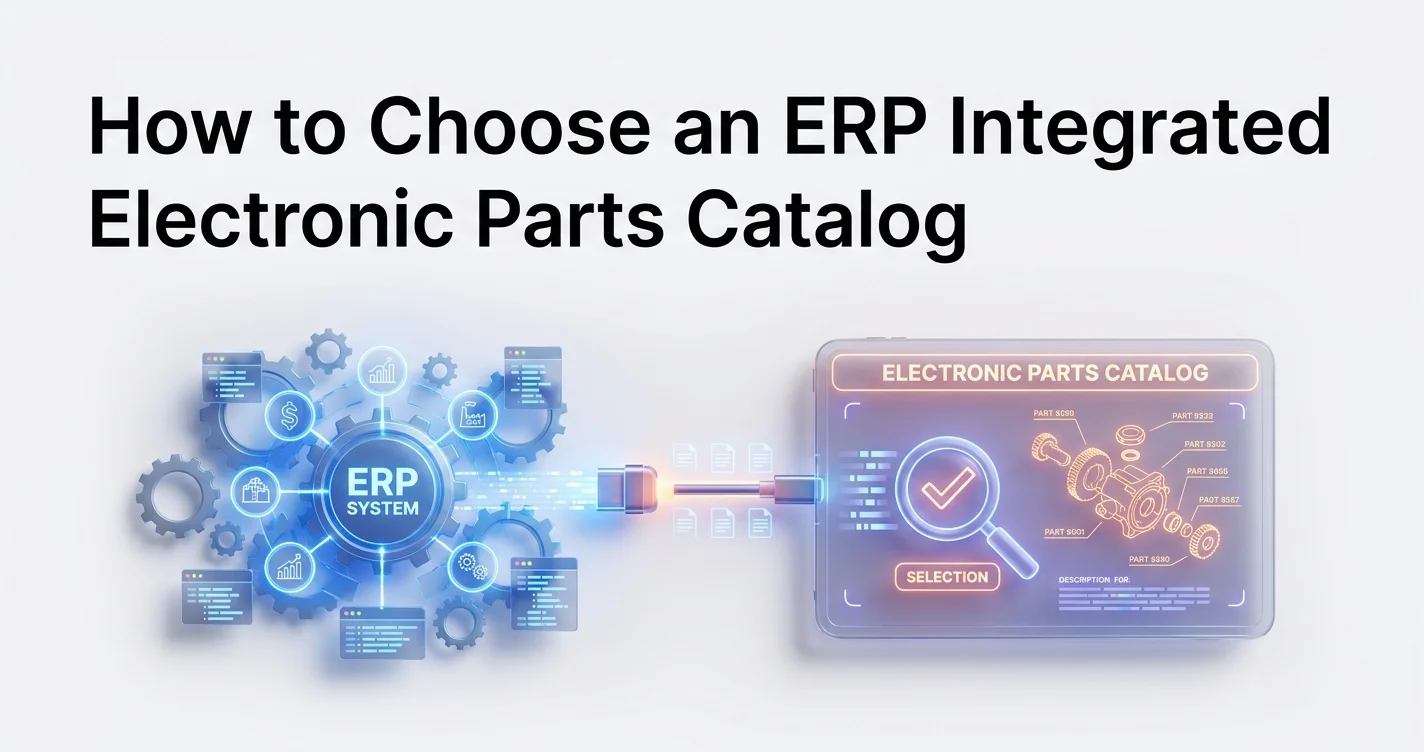
To eliminate ordering errors and protect aftermarket revenue, you need an erp integrated electronic parts catalog that bridges the gap between raw engineering data and the point of sale. Systems Online developed the EzParts platform to serve as this exact bridge, connecting interactive schematics directly to your existing resource planning software to convert complex manufacturing data into an intuitive revenue channel.
Deploying a successful catalog requires evaluating strict technical criteria, architectural trade-offs, and sophisticated data synchronization methods. The eCommerce to ERP integration market will grow at a 6.98% compound annual growth rate between 2026 and 2031, indicating that manufacturers are standardizing these connected architectures.
Criterion 1: Demand Two-Way Real-Time Data Synchronization
Providing an interactive parts catalog fails if the pricing and availability data is twelve hours old. Scheduled batch uploads that update inventory counts once a night via a CSV dump no longer meet industry standards because modern B2B buyers expect consumer-grade digital experiences. B2B organizations integrating their eCommerce platforms with their ERP systems report up to 80% fewer manual tasks and 40% faster order-to-cash cycles.
When a dealer logs into the portal, they need to see their negotiated contract pricing and exact warehouse stock levels immediately. Dealers abandon digital purchasing channels at the point of checking availability, pricing, or requesting quotes if real-time data is missing. If the catalog displays a part in stock but the ERP rejects the order an hour later due to a batch-sync discrepancy, that dealer will source a third-party alternative for their next purchase.
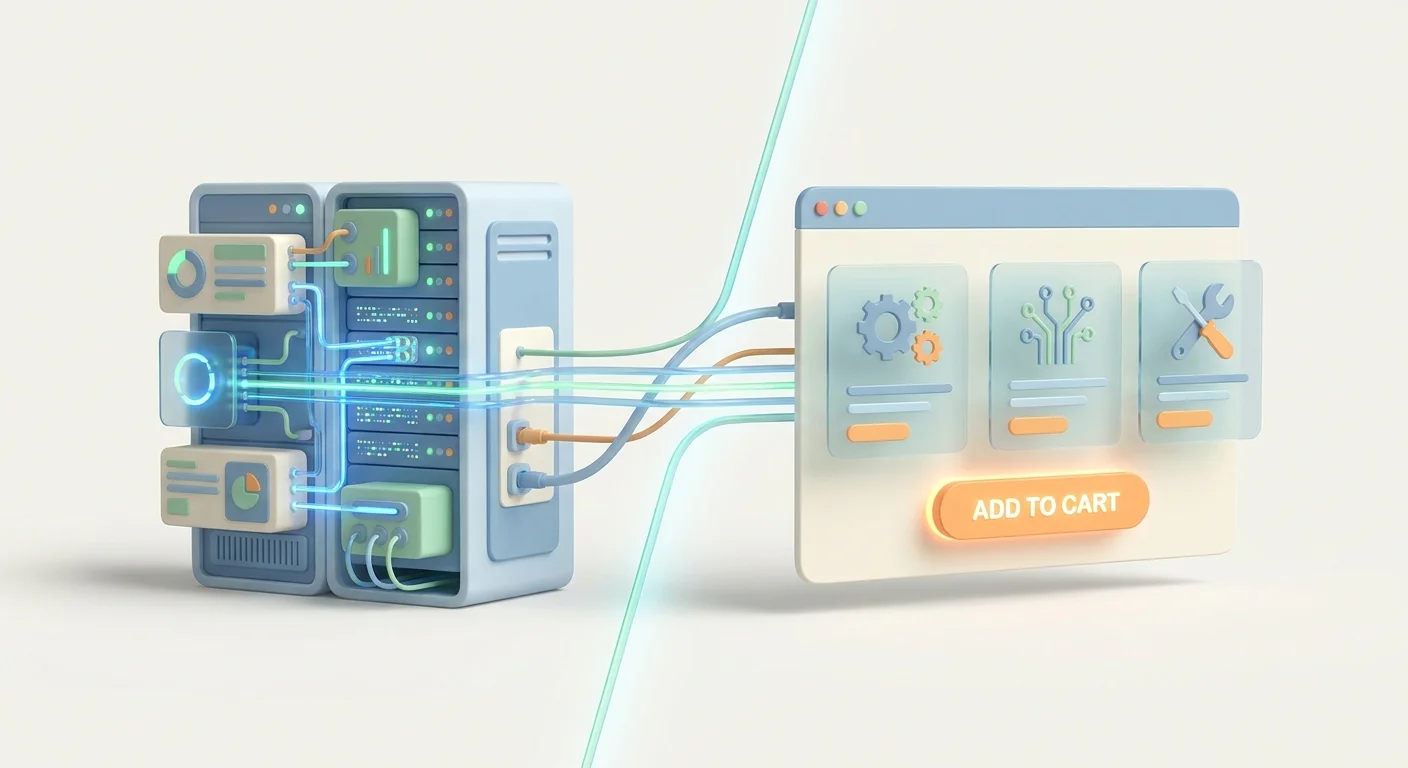
Require an electronic parts catalog software platform that utilizes two-way API middleware to flow data in both directions. The ERP pushes live master catalog data, inventory levels, and customer-specific pricing tiers to the catalog interface, while the catalog automatically pushes shopping cart data and order insertions directly back into the ERP. Modern environments utilizing SAP, Oracle, or Epicor have abandoned batch processing in favor of these continuous API handshakes.
Test candidate software by running a live cart simulation where you add a high-demand part to the catalog cart and simultaneously decrement that part's inventory to zero in your ERP test environment. Upon refreshing the catalog cart, the software must flag the item as backordered immediately. The API payload should carry the user identification data, query the exact warehouse associated with that dealer account, calculate any volume discounts dynamically, and return the precise monetary figure to the front-end user interface without measurable delay.
Criterion 2: Map Visual Navigation to Live Supersession Chains
Static line-item lists and flat PDF manuals force technicians to cross-reference multiple documents to verify a single part number, which invites human error. Traditional printed catalogs limit aftermarket growth because they cannot dynamically reflect live inventory changes, pushing frustrated buyers toward unauthorized suppliers. A modern catalog replaces text searches with visual navigation by mapping 2D scalable vector graphics or 3D models directly to your ERP SKU numbers.
Clicking a specific multi-shape hotspot on a schematic of an engine or hydraulic assembly queries the ERP to display the part name, current price, and warehouse location. This visual confirmation guarantees technicians select the exact physical component they see on the machine. You must ensure the chosen platform supports clickable geometries rather than generic rectangular image maps, allowing a user to select an irregularly shaped gasket without accidentally clicking the underlying engine block.
Manufacturers frequently update designs and replace older components with newer revisions, making automated supersession management a critical requirement. When a field technician searches for an outdated SKU from a ten-year-old manual, a disconnected system returns a dead end or an out-of-stock error. Failing to integrate ERP supersession data into the visual catalog generates high support ticket volumes and delays repair times.
Your catalog must pull supersession chains directly from the back end to automatically route a click on an obsolete part hotspot to the newest active replacement part. If a manufacturer redesigns a water pump impeller to correct a factory flaw, clicking the original impeller drawing should automatically add the newly engineered revision to the shopping cart while displaying a notification regarding the change. This automated routing eliminates the need for technicians to call support desks to verify replacement compatibility. Systems Online builds this capability natively into EzParts, ensuring engineering updates in your core database reflect across your entire dealer network without manual intervention.
Criterion 3: Filter Dynamic BOMs by Serial Number
The Engineering Bill of Materials (EBOM) tracks how a product is designed, but field technicians need a Service Bill of Materials (SBOM) that shows only the replaceable spare parts. Loading an unfiltered EBOM into a digital storefront overwhelms buyers with raw materials, paint codes, unmachined castings, and sub-assemblies they cannot purchase.
An integrated catalog dynamically converts engineering data into a service-ready format by stripping out non-serviceable items and automatically grouping the remaining parts into logical kits. If a water pump requires specific gaskets, mounting plates, and retaining bolts for installation, the catalog displays those kit components together based on the BOM structure. You must require a system that translates the raw manufacturing hierarchy into a visually intuitive service tree.
Equipment also undergoes hundreds of minor configuration changes on the assembly line, meaning two tractors of the same model year might feature entirely different transmission assemblies based on when they were built. Ordering a replacement gear based on the general model number risks delivering a part that does not fit the specific machine. Furthermore, ticket amounts for specific categories like engine parts grew at a compound annual growth rate of up to 6% between 2021 and 2025 largely driven by inflation. Ordering the wrong expensive engine component severely impacts shop profitability and customer satisfaction. Purchasing trends also vary by category, because HVAC parts experience seasonal online purchasing spikes that do not universally apply to baseline maintenance categories like brakes or steering.
Implement strict serial number and Vehicle Identification Number filtering by syncing equipment manufacturing records from the ERP. Entering a specific serial number must trigger the software to hide any schematic or part that does not apply to that exact unit. Test this during software evaluation by loading a serial number associated with a base-model machine to verify the catalog restricts access to premium upgraded components never installed on that specific unit. The software must successfully cross-reference the unit serial number against the master assembly records in the ERP, parsing thousands of potential part combinations to deliver a customized schematic view within seconds.
Criterion 4: Deploy Multi-Channel and Offline Capabilities
While 84.67% of large enterprises adopted cloud services by 2025, a metric that reflects European Union adoption rates, technicians in agriculture, mining, forestry, and defense frequently perform repairs in remote environments with zero cellular or internet connectivity. A cloud-only parts catalog provides no value to a mechanic standing in a trench miles away from a cell tower, and air-gap security protocols on military bases strictly prohibit cloud connections entirely. This persistent, strategic demand for offline distributed media remains a critical differentiator for industrial manufacturers.
Deploying a multi-channel framework solves this problem by ensuring the digital catalog operates across standard web browsers, native mobile applications, and offline distributed media. This flexibility allows technicians to download the complete interactive catalog, including all 3D schematics and historical pricing data, to a ruggedized device or USB drive before heading into the field.
The offline software must replicate the core functionality of the live web portal so technicians can search serial numbers, click schematic hotspots, verify supersession chains, and build complete shopping carts entirely disconnected from the network. They achieve this through localized SQL databases that mirror the primary ERP structures but remain isolated on the device hardware.
Once the device returns to cellular range, the software must automatically queue the offline shopping cart and sync it with the main ERP system for immediate order insertion. The system needs to check current inventory upon reconnection, alerting the technician if any items placed in the offline cart went out of stock during their field deployment. Systems Online provides this offline distributed media capability natively, and you can review how to choose an SAP integrated spare parts catalog to see how deep integration functions during temporary network drops and eventual payload synchronizations.
Decision Aid: Prioritize Your Deployment Strategy
Choosing the right configuration depends on your user base and equipment complexity, because optimizing for one feature often requires deliberate architectural trade-offs elsewhere. Use this matrix to map your business model to the appropriate catalog deployment strategy based on concrete mechanical realities.
| Business Environment | Primary Challenge | Recommended Focus Area | Technical Trade-off |
|---|---|---|---|
| Heavy Machinery & Agriculture | Remote field repairs without network connectivity or in areas requiring strict air-gap security protocols. | Offline distributed media and native mobile apps utilizing local SQL databases. | Requires complex local database synchronization protocols, careful conflict resolution during payload uploads, and higher storage capacity on field devices to hold thousands of interactive SVGs. |
| High-Volume Consumer Goods | Frequent price fluctuations, rapid inventory turnover, and high volumes of baseline maintenance parts like brakes or steering columns. | Two-way real-time API syncing to ensure inventory decrements instantly across all channels. | Demands continuous high-bandwidth server polling, increasing the computational load on your core ERP infrastructure to prevent concurrent order conflicts. |
| Custom / Configured Equipment | High error rates due to variable build configurations and inflation-driven cost increases on specialized engine parts. | Serial number and VIN filtering tied directly to the engineering and service BOM logic. | Requires pristine historical build data in your core systems; bad manufacturing records, manual overrides, or unrecorded assembly line substitutions will result in empty search results for the user. |
| Legacy Dealer Networks | Older franchises refusing to adopt digital portal screens or specific independent mechanics demanding physical reference books. | Automated print engine utilities connected directly to the ERP data structure. | Generates static documents that require frequent republishing to maintain pricing accuracy, meaning older printed versions quickly fall out of sync with actual warehouse reality. |
Prioritizing offline access for heavy machinery requires allocating resources for field device storage capacity and enforcing update protocols before site deployment, whereas prioritizing real-time API syncing for high-volume goods requires server optimization to handle concurrent queries without bottlenecking internal operations. Review this Microsoft Dynamics parts catalog eCommerce buyer's guide to understand how these database trade-offs apply to enterprise environments processing thousands of transactions daily.
Implementation Best Practices: Establish the System of Record
A software tool cannot fix broken data, requiring you to define strict data sources of truth and lock down permissions before integrating an electronic parts catalog. Today, 85% of B2B organizations utilize an eCommerce storefront or self-service portal, and 66% are actively increasing their financial investment in these tools. However, allowing administrative users to manually override pricing or inventory counts directly inside the catalog interface guarantees data corruption and rapid margin erosion.
Establish your ERP as the single source of truth for pricing, customer contract tiers, warehouse inventory levels, and supersession chains, while designating your Product Lifecycle Management system as the authority for engineering BOMs and schematic graphics.
The electronic parts catalog acts strictly as the interactive consumption layer, pulling raw engineering graphics from the PLM to overlay live pricing from the core system. Clicking the purchase button passes the command immediately back to the central database without pausing in an intermediary holding table. You must fix incorrect prices in the ERP and outdated drawings in the PLM rather than patching data directly in the catalog. Circumventing this hierarchy causes the exact manual reconciliations that integration seeks to eliminate.
Migrating to digital screens causes friction for traditional dealer networks where older mechanics still demand physical paper manuals. Rather than maintaining two separate, labor-intensive publishing processes, utilize an automated print engine utility.
Catalog platforms should feature print engines that dynamically generate branded PDF parts books directly from the live data structure. Updating a supersession chain in the central database automatically flows that change into the PDF layout for that specific equipment model, generating accurate physical materials for traditional dealers without breaking the single source of truth or duplicating administrative labor. You configure the page templates once, and the software handles the pagination, indexing, and component grouping based on the service BOM rules.
Integrating back-end data with aftermarket sales channels stops revenue leakage and reduces equipment downtime by ensuring field technicians get the right part on the first try. Dealers stop abandoning their shopping carts and internal teams stop processing manual reconciliations, provided you meticulously map engineering records to inventory systems before building the aftermarket portal.
Systems Online helps equipment manufacturers eliminate ordering errors and boost aftermarket sales with EzParts, a multi-channel electronic parts catalog. Whether you need direct ERP integration for real-time pricing or robust offline capabilities for remote field technicians, our software delivers interactive schematics directly to your buyers. Visit sysonline.com to see how EzParts transforms engineering data into a high-converting digital storefront.
Modified on: 08/20/2026