Blog » Leveraging a Digital Parts Catalog to Boost Aftermarket Revenue
Leveraging a Digital Parts Catalog to Boost Aftermarket Revenue
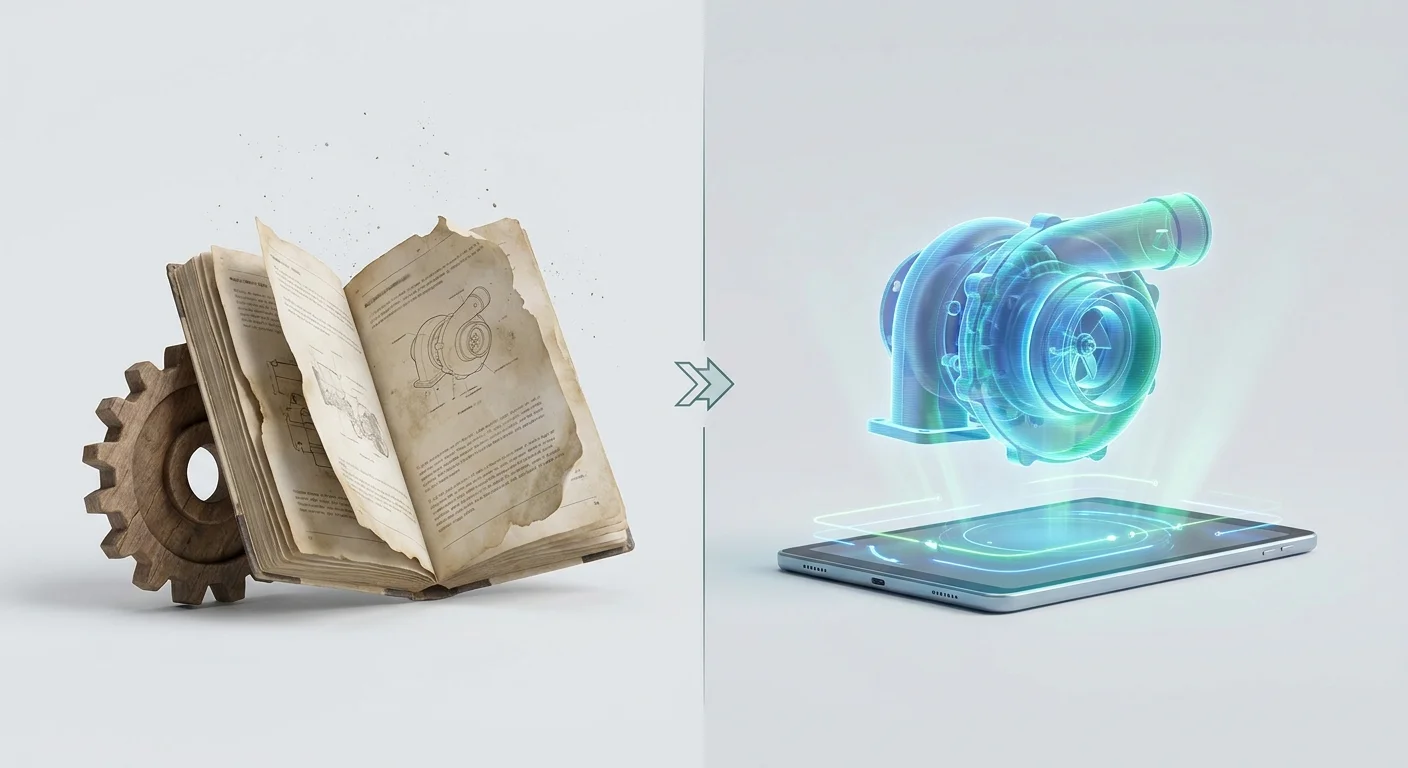
When a machine breaks down on a job site, the clock starts ticking on massive financial losses. Every minute a technician spends flipping through a static PDF increases downtime and puts customer loyalty at risk. You can plug these immediate revenue leaks by deploying a digital parts catalog to boost aftermarket revenue. Replacing outdated paper manuals with an accurate, visual ordering system protects your margins and stops wrong-part orders before they happen. Original equipment manufacturers currently see aftermarket parts and services account for 10% to 29% of their total revenue. Because whole-equipment sales are plateauing, this aftermarket share is expected to grow as manufacturers prioritize consistent service income. Systems Online’s EzParts provides the foundation for this transition, turning static line items into interactive purchasing channels that integrate natively with your core business systems.
The True Cost of Equipment Downtime and Ordering Errors
The High Price of Unplanned Downtime
Unplanned equipment downtime drains capital at an alarming rate across all industrial sectors. An idle machine does more than pause production; it triggers missed delivery penalties, idle labor costs, and downstream supply chain bottlenecks. The financial penalty sits at $85,000 per hour in Food and Beverage and scales up to $2.3 million per hour in Automotive manufacturing, so companies cannot afford a procurement process that delays repairs. Furthermore, Aberdeen Research calculated that the average cost of unplanned downtime across all manufacturing sectors sits at $260,000 per hour, though this figure fluctuates based on plant size and production volume. Zooming out to a macro level, a 2024 Siemens report found that Fortune Global 500 companies lose a combined $1.5 trillion per year to unplanned equipment downtime, which represents 11% of their total revenues. When a component fails, the speed of identification determines the length of the outage. Relying on paper manuals or flat document files forces operators to manually cross-reference part numbers against separate pricing sheets, which adds hours to a repair timeline before a buyer even submits a purchase order. For example, a broken conveyor motor in a bottling plant might sit idle for half a shift while a supervisor hunts down a physical binder to find the right replacement variant.
Why Human Error Drives Revenue Leaks
Mechanical failure initiates the downtime, but human error extends it. While equipment failure causes 42% of unplanned manufacturing downtime, human error causes 23% of these incidents, a rate that shifts depending on the complexity of the specific repair task. This frequently includes incorrect part ordering, mismatching, or improper installation. A technician looking at a dense grid of numbers frequently transposes digits or selects a component for the wrong model year. Consider a scenario where a buyer orders a left-hand thread bolt instead of a right-hand thread bolt due to a single mistyped digit. The financial damage of these mistakes compounds quickly because the manufacturer incurs the initial shipping cost, the labor cost to process the return, the second shipping cost for the correct item, and the restocking overhead. You can reduce spare parts ordering errors by removing manual number entry from the workflow entirely. A visual-first electronic parts catalog (EPC) allows the buyer to click on the exact visual representation of the component they need, generating a perfect match every time.

Protecting OEM Margins from Third-Party Competitors
The Erosion of OEM Monopolies
Original equipment manufacturers rely on aftermarket sales as a stabilization engine when whole-goods purchases fluctuate, but that revenue stream faces aggressive threats from independent manufacturers producing cheaper alternative components. The global B2B digital aftermarket parts market crossed $72 billion in 2024, according to the Automotive Aftermarket Suppliers Association. This massive growth attracts new competitors looking to siphon profitable replacement business away from original manufacturers. Independent suppliers win market share by prioritizing convenience. Because brand loyalty rarely survives a frustrating user experience, buyers will quickly open a new tab and order from a third-party distributor offering a modernized eCommerce front-end if an OEM requires them to call a representative or decipher a clunky spreadsheet to verify compatibility.
Building a Competitive Moat with EPCs
A digital parts catalog to boost aftermarket revenue acts as a competitive moat that protects your market share by making proprietary parts easier to identify and purchase than third-party alternatives. When buyers log into a portal and input their equipment's specific serial number, the catalog filters out every irrelevant item. The buyer sees only the exact bill of materials (BOM) for their machine. To achieve this, the software queries the original manufacturing run data and hides the dozens of alternate engine blocks or wiring harnesses that do not apply to that specific unit. Third-party sites cannot offer this level of serial-specific accuracy because they lack access to the original engineering data. You increase aftermarket parts sales by weaponizing this data advantage. Providing a flawless, verified purchasing experience ensures dealers and product owners return to your official channel for their next repair. A contractor looking to replace a hydraulic pump will choose the OEM site over a cheaper alternative if the OEM platform guarantees fitment and removes the risk of ordering an incompatible part.
Key Features of a Revenue-Driving Digital Catalog
Interactive 2D and 3D Schematics
Modern purchasing platforms replace static grid layouts with interactive, multi-shape hotspots that let users view an exploded 2D diagram or a rotating 3D model of their machinery. High-end systems are standardizing AI-driven natural language, vehicle identification number, and serial number searches to recognize what the user needs before they even open the schematic. Hovering over a specific gear or bracket prompts the software to highlight the component's exact shape while displaying its part number, current price, and availability. Clicking the shape adds the item directly to an integrated shopping cart, stopping wrong-part orders at the source since the buyer never has to guess which bolt corresponds to line item 42 on a separate page. If a technician needs to inspect a complex gearbox assembly, they can use their mouse to rotate the 3D model, hide outer casing layers, and isolate internal bearings. Systems Online builds EzParts around these visual workflows, ensuring field technicians and dealers confirm fitment with their own eyes before spending capital.
Automated Supersession Management
Because equipment lifecycles often span decades, engineering teams continually update materials, consolidate parts, and release new revisions. Managing these superseded items creates a massive administrative burden, as manual systems force users who click an outdated part number on an old schematic to search a separate database for the modern replacement. An effective electronic parts catalog automates supersession tracking. When a dealer selects a retired component in EzParts, the platform intercepts the action and automatically redirects the user to the active replacement part. This logic handles one-to-one replacements, one-to-many kits, and many-to-one consolidations, eliminating fulfillment delays by preventing obsolete numbers from ever entering the shopping cart. Picture an operator trying to order a water pump that the factory recalled in 2021. The system immediately drops the newly engineered 2024 pump kit into their cart alongside a visual alert explaining the substitution, keeping the procurement process moving without requiring a phone call.
Empowering Remote Field Service Technicians
The Demand for Offline Capabilities
Digitizing field service operations reduces maintenance and labor costs by 15% to 30%, a savings range that varies heavily depending on the specific asset class and operational environment. Achieving those savings requires getting technical data directly into the hands of the workers performing the repairs. Because heavy equipment like mining excavators, agricultural combines, and offshore energy rigs often operates far from reliable cellular networks, cloud-only SaaS applications fail completely in these disconnected environments. A technician attempting to service a tractor in a remote rural field will encounter an infinite loading screen on a standard web portal. To solve this, your digital delivery framework must include native offline support. Systems Online provides distributed media options that install the entire interactive catalog locally on a technician's laptop or mobile device, allowing them to maintain full access to complex diagnostic and ordering workflows miles away from a cell tower. The software caches the interactive BOMs, the user interface, and all relevant technical service bulletins on the local hard drive, matching the exact experience of the cloud version.
Improving First-Time Fix Rates (FTFR)
A service department's profitability hinges on its First-Time Fix Rate, as every return trip to a customer site destroys margin through extra fuel, wasted labor hours, and extended equipment downtime. When technicians arrive at a site and diagnose a fault, they need immediate confirmation of the required repair components. Lacking access to serial-specific parts data forces them to guess by ordering two different variations of a valve hoping one fits, or by recording the wrong number and delaying the repair. Deploying a native mobile EPC solves this by ensuring technicians verify the exact required component while standing next to the machine, building accurate offline pick lists that synchronize the moment they drive back into network range. The technician taps the required hose on their offline tablet, adds it to the local cart, and packs up their tools. Once their service truck reaches the highway and regains cellular service, the application detects the connection, pings the central database, and automatically submits the purchase order.
Seamless Core ERP System Integrations
Real-Time Inventory and Pricing Sync
Standalone catalogs create disjointed buying experiences that kill sales through friction, such as forcing a dealer who builds a cart in one portal to log into a separate system to check stock or contracted pricing. To avoid this, an EPC must function as an extension of your existing enterprise resource planning (ERP) software by integrating natively with platforms like SAP, Oracle, Epicor, or Dynamics. This API connection pulls live data into the visual interface so that clicking a schematic prompts the system to check the ERP, calculate specific pricing tiers, and display accurate availability across regional warehouses. This immediate feedback ensures buyers never place an order for a part that went on backorder ten minutes earlier. If a fleet manager needs six filters and the primary regional warehouse only has four, the integrated system automatically splits the order to pull the remaining two units from a secondary facility. The integration also processes customer-specific discounts, displaying a distinct wholesale price for a top-tier distributor while showing standard retail rates to an end user.
Creating a Unified eCommerce Experience
Since data flows in both directions, the EPC pushes the order directly into the ERP once a user verifies their items and completes checkout. This automated order insertion accelerates fulfillment and prevents customer service representatives from manually re-typing purchase orders from emails into the accounting system. A submitted cart instantly generates a sales order in SAP, which then triggers a pick ticket on the warehouse floor without any human intervention. Implementing integrated electronic parts catalog software transforms a passive reference tool into an active, revenue-generating eCommerce hub. Buyers gain self-service capabilities, and OEM sales teams reclaim hours previously spent clarifying ambiguous orders over the phone. Staff members who used to spend their mornings deciphering faxed order forms can transition into proactive account management roles, focusing on upselling service contracts instead of fixing data entry errors.
Bridging the Gap for Legacy Dealers
Supporting Traditional PDF and Print Formats
While eCommerce adoption accelerates, the heavy equipment industry retains a segment of legacy dealers and international partners who refuse to use digital portals. These accounts request traditional, branded PDF files or physical paper parts books to store on their shop floors. An environment filled with grease and heavy solvents makes deploying expensive tablets impractical for some maintenance crews, driving a persistent demand for physical reference materials. A complete digital strategy accounts for this analog demand without slowing down digital operations. Managing this analog channel historically forces your publishing departments to waste weeks manually formatting page layouts, matching text grids to static images, and exporting documents for every product line. Because the entire formatting process starts over whenever engineering releases a mid-year update, this manual publishing model drains resources and guarantees that printed materials ship with outdated data.
Automating Legacy Parts Books
You eliminate this bottleneck by generating printed materials directly from the digital database. The automated print engine inside EzParts maps your live BOM data and vector graphics to custom templates. When a legacy dealer requests a manual, your team selects the model and clicks publish, prompting the engine to dynamically build a highly structured PDF complete with a table of contents, indexed part numbers, and branded headers in seconds. The software systematically arranges the callout numbers on the exploded view to correspond perfectly with the adjacent text grid, scaling the images automatically to fit standard paper sizes. Because the print engine pulls from the same centralized database powering the eCommerce portal, the PDF contains the exact same supersession updates and accuracy as the live website. If a dealer calls to request a customized parts book covering only the hydraulic attachments they frequently service, the administrator can filter the export and deliver a bespoke PDF within minutes.
Measuring ROI and Implementation Success
Calculating Cost Avoidance
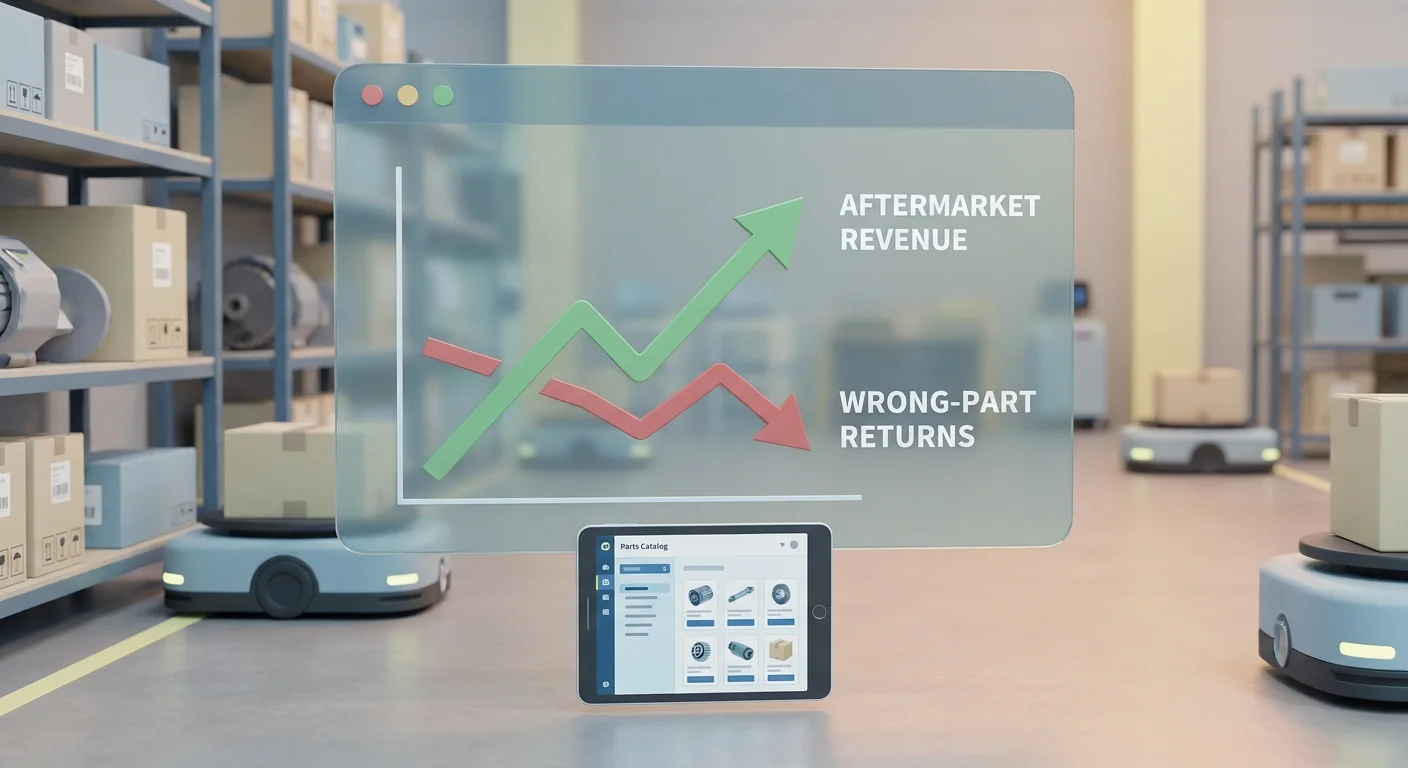
A digital parts catalog to boost aftermarket revenue pays for itself through measurable cost avoidance, provided you establish baseline metrics before implementing the new software. Start by tracking the total hours spent manually formatting PDFs or responding to parts identification calls, and calculate the average monthly expense of shipping wrong parts back to your central warehouse. Quantify the reverse logistics costs, including the price of return freight, the hourly wages of receiving clerks who process the inbound boxes, and the write-offs for components damaged during the secondary transit. Once the catalog launches, monitor the reduction in these overhead categories. Eliminating the manual publishing workload frees technical writers to focus on high-value service bulletins rather than formatting grids, while dropping the wrong-part return rate directly recovers margin previously lost to reverse logistics.
Tracking Post-Launch Metrics
Measure user adoption and field efficiency to gauge the platform's impact. Open your analytics dashboard to track the percentage of total aftermarket orders flowing through the digital interface versus phone or email channels, as a rising digital adoption rate correlates directly with a drop in customer service labor costs. You can export these usage logs to identify which dealerships continue calling the support desk and target them with specialized training sessions on the visual search features. Monitor changes in your Mean Time to Repair (MTTR) and First-Time Fix Rate. As technicians and dealers rely on visual identification to order the correct components on their first attempt, repair timelines shrink. Because faster repairs generate higher customer satisfaction, this efficiency drives repeat whole-goods purchases down the line. A fleet operator who experiences minimal downtime with a specific brand will inevitably prioritize that manufacturer when expanding their operations the following year.
Eliminate costly ordering errors, automate your parts book publishing, and equip your dealers with the interactive tools they need to drive sales. Discover how Systems Online can transform your static engineering data into a powerful, multi-channel eCommerce platform.
Modified on: 07/29/2026